
Socioemotional learning is gaining traction in schools as a response to growing concerns about student behavioral challenges and their wellbeing and flourishing. In the Bethlehem Area School District, the Beyond Books team, a Lehigh Valley Social Impact Fellowship project, is bringing this approach into classrooms at both Donegan Elementary School and Broughal Middle School. The team works with fifth graders at Donegan and sixth graders at Broughal, using storytelling as a framework for change to help students build empathy, manage emotions, and navigate conflict in healthier ways.
Although the project began developing in 2022, this semester marked the first full implementation of the project in local school classrooms. After years of curriculum development and pilot testing, including crafting a toolkit for school leaders and teachers, seeing the workshops unfold in real classrooms brought new focus to the team’s work.
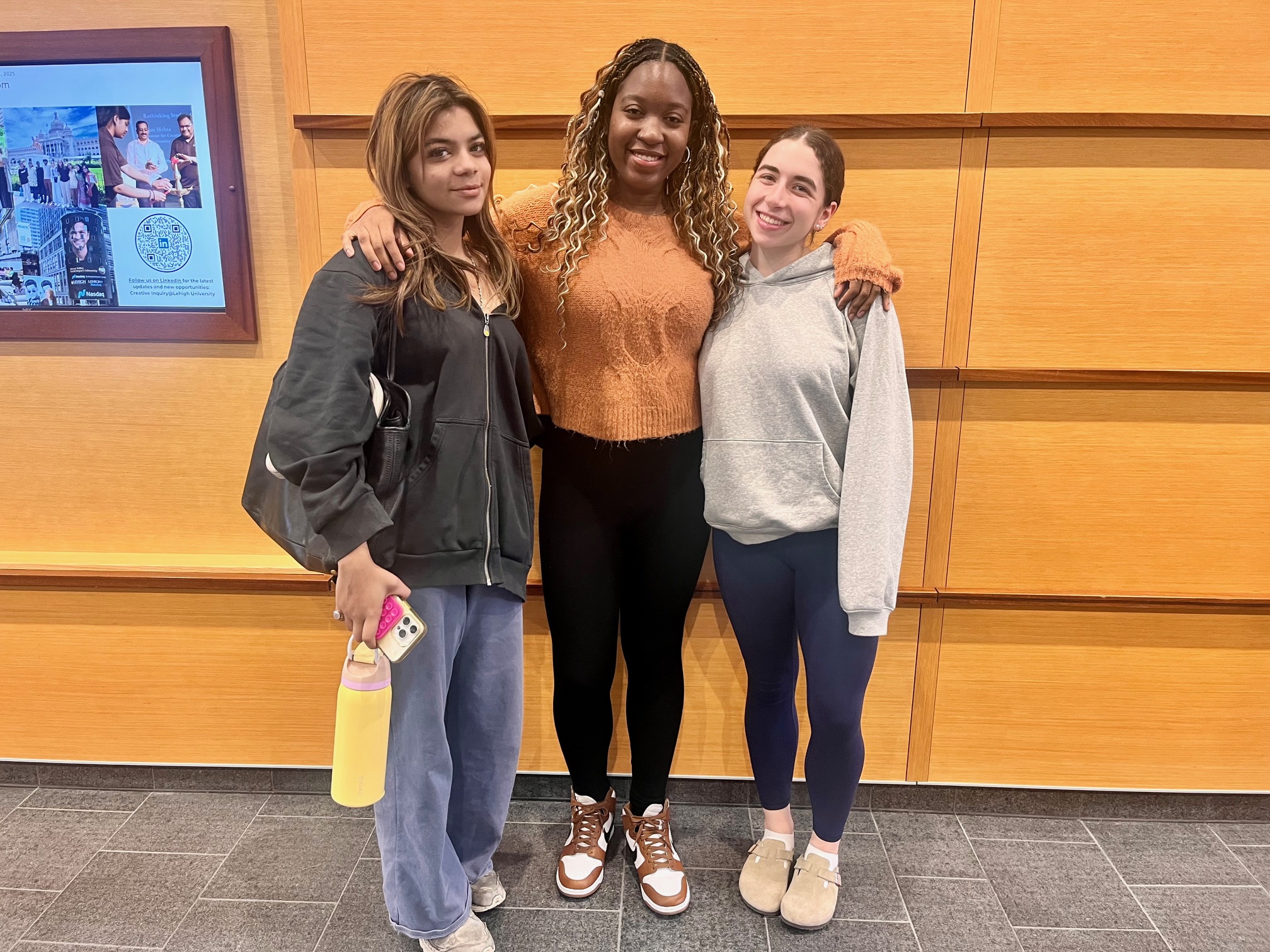
The three 2025 Impact Fellows, Sadhika Raj '27, an English and philosophy major, Sophie Saunders '28, a community and global health major, and Daijah Scott '27, a political science and economics major, led eight workshops in November-December, across three fifth grade classrooms at Donegan and two sixth grade classrooms at Broughal. Each 45-minute session centered on a storytelling prompt built around a relatable challenge such as peer pressure or bullying. Responding through a character’s perspective lowered the pressure on students and created space for more open, reflective conversations.
“Our goal was to help students build empathy, self-awareness, and conflict resolution skills in a way that feels natural and supportive,” Saunders said. “When we ask students what they would do through the lens of a character, they are often more open and willing to talk.”
That structure encouraged thoughtful participation. “Using the character in the story instead of putting a single student in the spotlight usually leads to more honest and reflective conversations,” she said. “It also builds a sense of belonging as the whole class is exploring the same situation.”
The workshops are interactive and include a free-drawing option for students who prefer visual expression. This flexibility helped create an environment where students felt comfortable sharing their thoughts. All student participants get to construct their own stories and then present them to one another, leading to dialogue, community, and confidence.
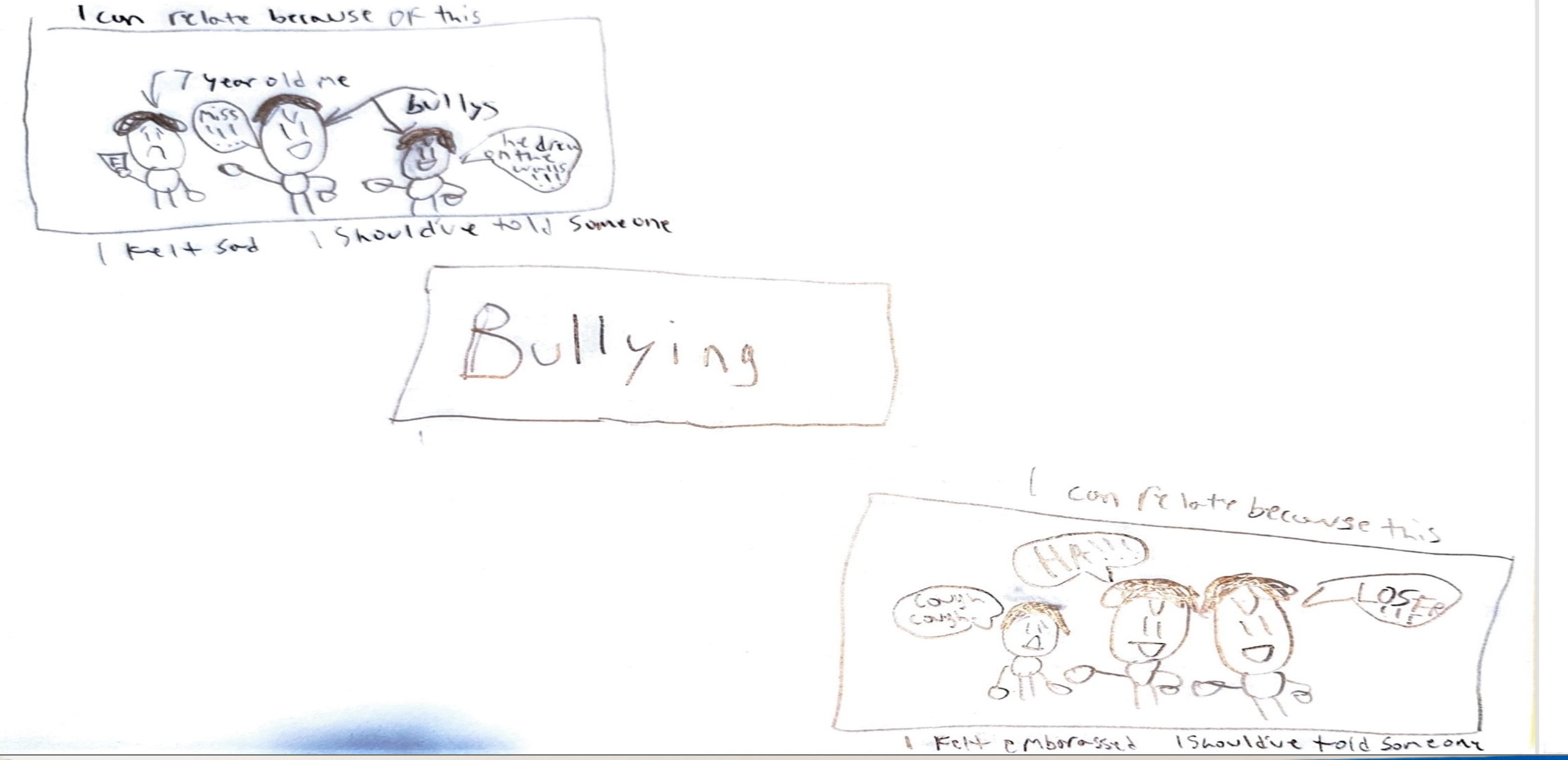
Raj noted that every session looked a little different. “Classroom dynamics, teacher style, and even the day’s schedule could shape the experience,” she said. “We adapted in real time and grew more attuned to the emotional environment of the room.”
The Fellows say the experience reshaped their understanding of school communities and the role storytelling can play in restorative practice.
“Working with Donegan’s staff helped me understand how complex the school environment is,” Scott said. “The process of building trust, creating space for vulnerability, and encouraging restorative conversations requires patience and intention.”
One moment stood out to her. During a workshop on self-image, a student shared her experience with body shaming. “The room grew quiet, then thoughtful,” Scott said. “It reminded me that storytelling is just as much about listening as it is about speaking.”
To continue this work in the coming year, the 2026 Impact Fellows, including Madison Danquah '27, a psychology major; Emily Perez '28 and Allison Caruthers ‘28, political science majors; and Lissie Skrenta '29, a sociology major, will carry the project forward in Bethlehem schools. Saunders will continue participating and advising their work as a continuing Impact Fellow. As the 2025 team transitions off the project, they hope next year’s cohort will continue expanding school partnerships, refining the workshops, and collecting formal data to build evidence of impact. Saunders said the team also envisions creating an online storytelling toolkit that teachers can use independently.
“We want to equip students with tools that help them reflect, repair, and grow before conflict becomes a crisis,” she said. “We are just getting started. But these students are already showing us what is possible.”