
Faculty Spotlight: Dhruv Seshadri, assistant professor of bioengineering
Engineering with Purpose
Why did you choose to lead Global Social Impact Fellowship projects?
Dhruv Seshadri leads two Global Social Impact Fellowship projects in Kazakhstan, TremorTrack and Swello, focused on wearable monitoring systems for Parkinson’s disease and post-stroke dysphagia. The work aligns with his research and his belief that meaningful global engagement begins with humility and long-term partnership, which is central to Lehigh’s Creative Inquiry approach.
Seshadri said Vice Provost for Creative Inquiry Khanjan Mehta’s vision was a key reason he wanted to get involved. “For me, his vision sold me on wanting to be part of the program,” he said, adding that the structure supports research designed for real-world impact.
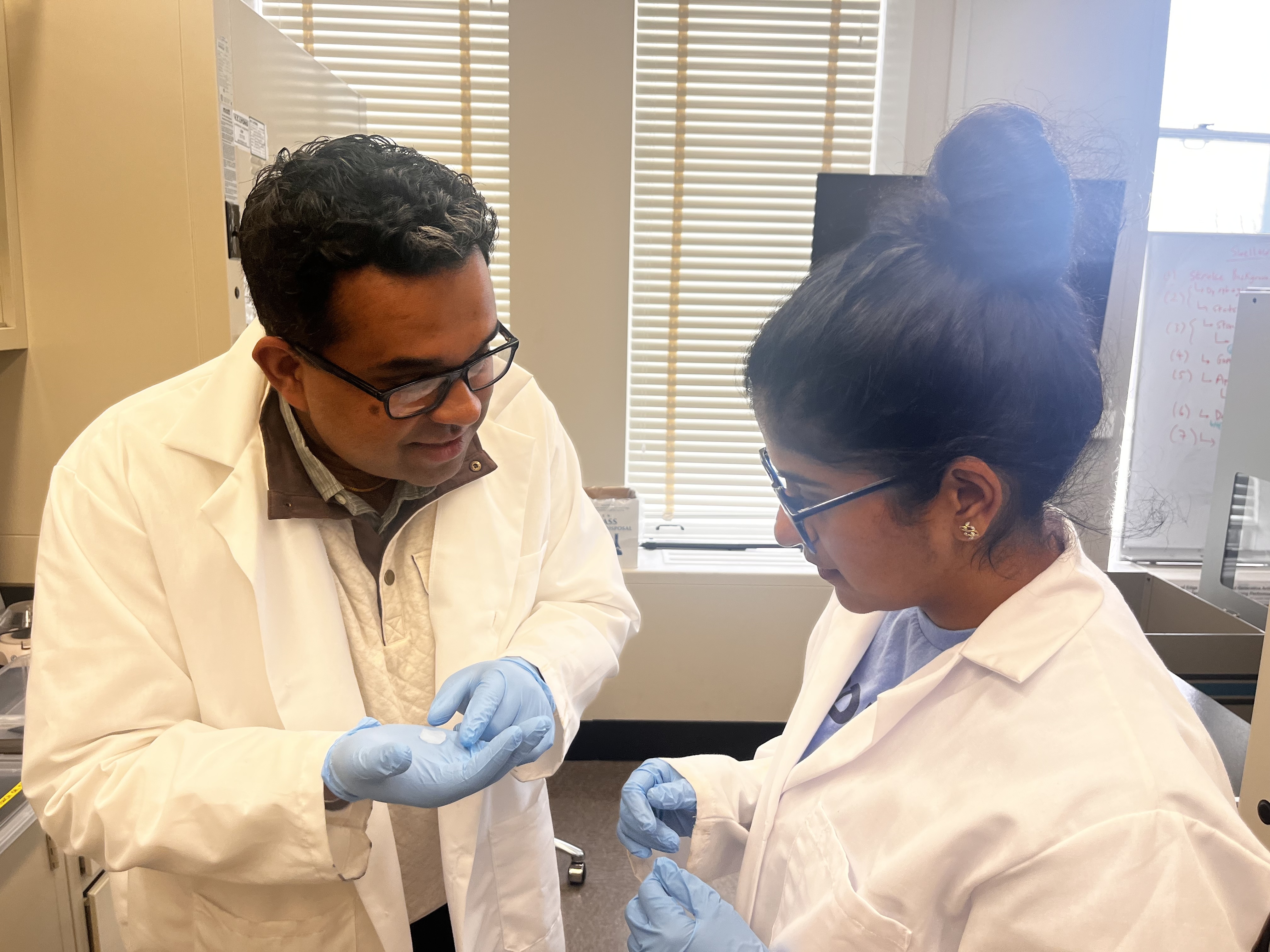
“Most people start with research,” he said. “I believe it should be service, education, research.”
In May 2025, Seshadri and his two teams of Impact Fellows traveled to Almaty for two weeks of fieldwork, working alongside local clinicians, researchers and community partners. Rather than arriving with ready-made solutions, the team prioritized relationship building and trust. In Kazakhstan, neurological conditions such as Parkinson’s disease can be misunderstood or stigmatized, making community education and partnership an essential part of the work.
Seshadri said he chose Kazakhstan intentionally because he wanted to be in a place where he and his students would be pushed outside familiar contexts and could contribute within a changing healthcare ecosystem.
“Real impact starts with listening,” he said. “If you want to serve a community well, you have to understand it first.”
How do students respond to the experience?
For Impact Fellowship students, fieldwork extends far beyond traditional coursework. In Kazakhstan, students moved from classroom theory into real-world engagement, meeting clinicians, observing care environments and navigating cultural differences.
“I saw them change over the two weeks,” Seshadri said. “They became more confident, more thoughtful and more aware of how engineering intersects with people’s lived experiences.”
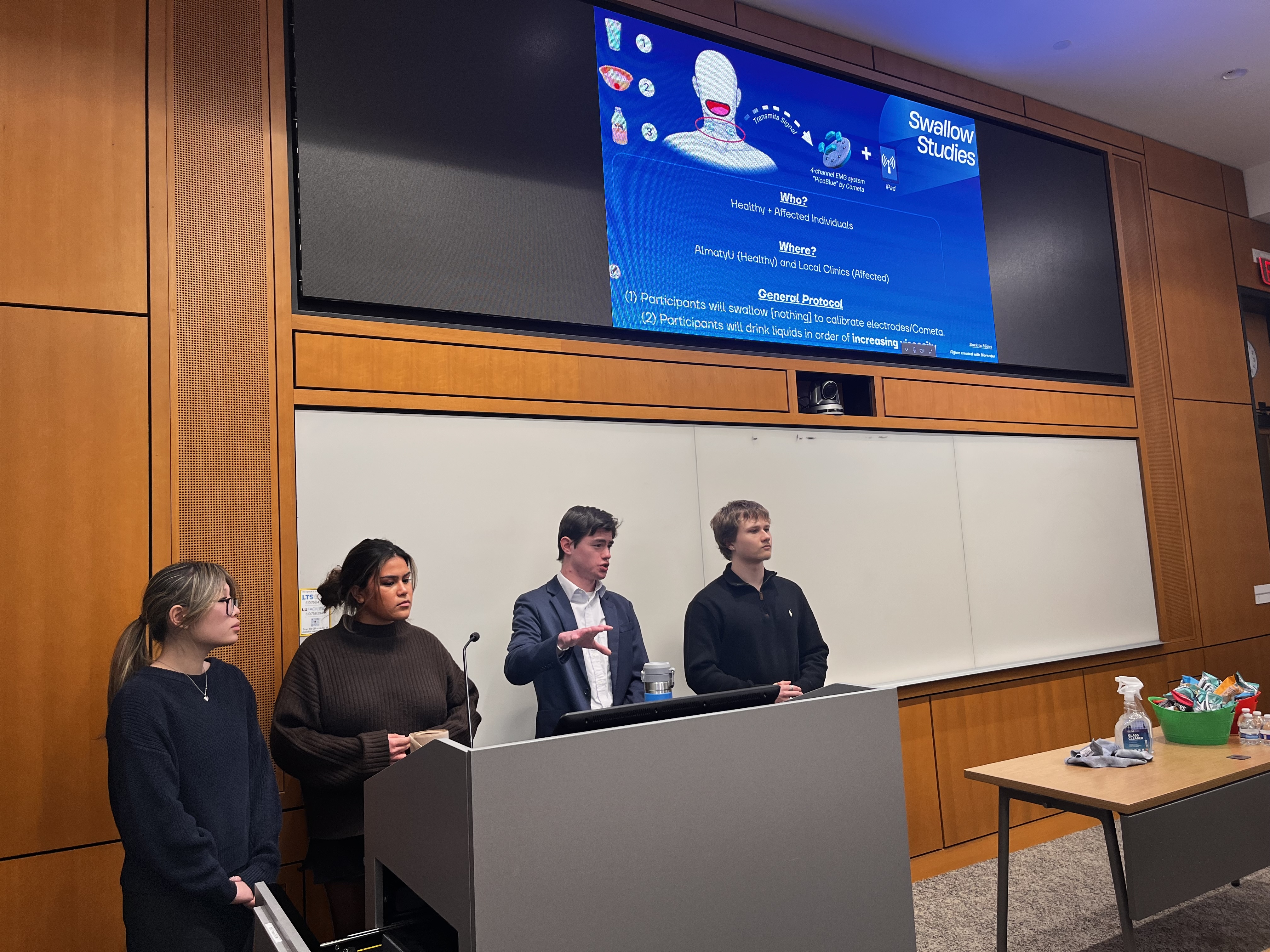
Students also see how implementation depends on more than technical design. They learn to work within real constraints, respond to community priorities and build trust over time.
“They realize it’s not about having the perfect solution,” Seshadri said. “It’s about listening, building trust and staying engaged long enough to make a difference.”
What is your primary area of focus?
Dhruv Seshadri is an assistant professor of bioengineering whose research centers on wearable technologies, medical devices and bioelectronic systems that improve human health and performance. Since joining Lehigh in 2023, he has built a lab that moves innovations from early-stage development to real-world clinical translation.
His team works across several key areas, including human performance, women’s health, neuromuscular disease and cardiovascular screening. Whether designing wearable systems to monitor Parkinson’s disease or developing low-cost tools for maternal health, the goal is the same: create deployable, bio-integrated technologies that improve lives.
“We focus on technologies that can translate beyond the lab,” Seshadri said. “Impact is always the first and final goal.”
What motivates your work?
For Seshadri, engineering is deeply personal.
His grandfather lived with dysphagia, a condition that impairs swallowing and can lead to serious complications. Seshadri recalls spending holidays in the hospital, watching his grandfather rely on feeding tubes and repeated medical interventions. The experience left a lasting impression.
“Seeing someone you love struggle with something as basic as swallowing changes the way you think about medicine,” he said.
That experience shaped his commitment to developing wearable systems that can monitor swallowing function and support rehabilitation in patients recovering from stroke or living with neurological disease. His goal is not only to improve clinical monitoring, but to preserve dignity and quality of life.
What advice would you give to students interested in similar work?
“Find your why,” Seshadri said.
He encourages students to pursue experiences that stretch them, ask questions, seek mentors they connect with and take thoughtful risks, whether in the lab or abroad.
“Try something you’ve never tried before,” he said. “Those small steps add up.”
For Seshadri, the goal is purpose-driven innovation that reaches beyond the lab. When students connect their work to a clear sense of why, he said, they are better prepared to create meaningful, sustained impact.