
When flu and other respiratory illnesses spread across a college campus, the impact is immediate. Students miss class, fall behind on assignments and, in some cases, face greater health risks. Yet many campuses lack a timely, accessible way to communicate what is happening and what students should do next.
A Campus Social Impact Fellowship project, From Weathercasts to Healthcasts: A Campus Framework for Influenza Communication (FluCast), is working to close that gap at Lehigh University. The student team is developing tools to analyze and forecast illness trends so the campus community can better anticipate surges and take preventive steps.
Now in its first year as an Impact Fellowship project, AA the 2026 FluCast cohort includes Kelly Peralta ’28, a behavioral neuroscience major; Wajiha Saba ’28, a biology major; Anishkha Bhavanasi ’29, a biostatistics major; and Chloe Lee ’28, a population health major. This interdisciplinary team, recruited by project faculty mentor Prof. Thomas McAndrew of the College of Health, combines mathematical modeling, data science and strategic communication to translate complex health data into clear, actionable updates.
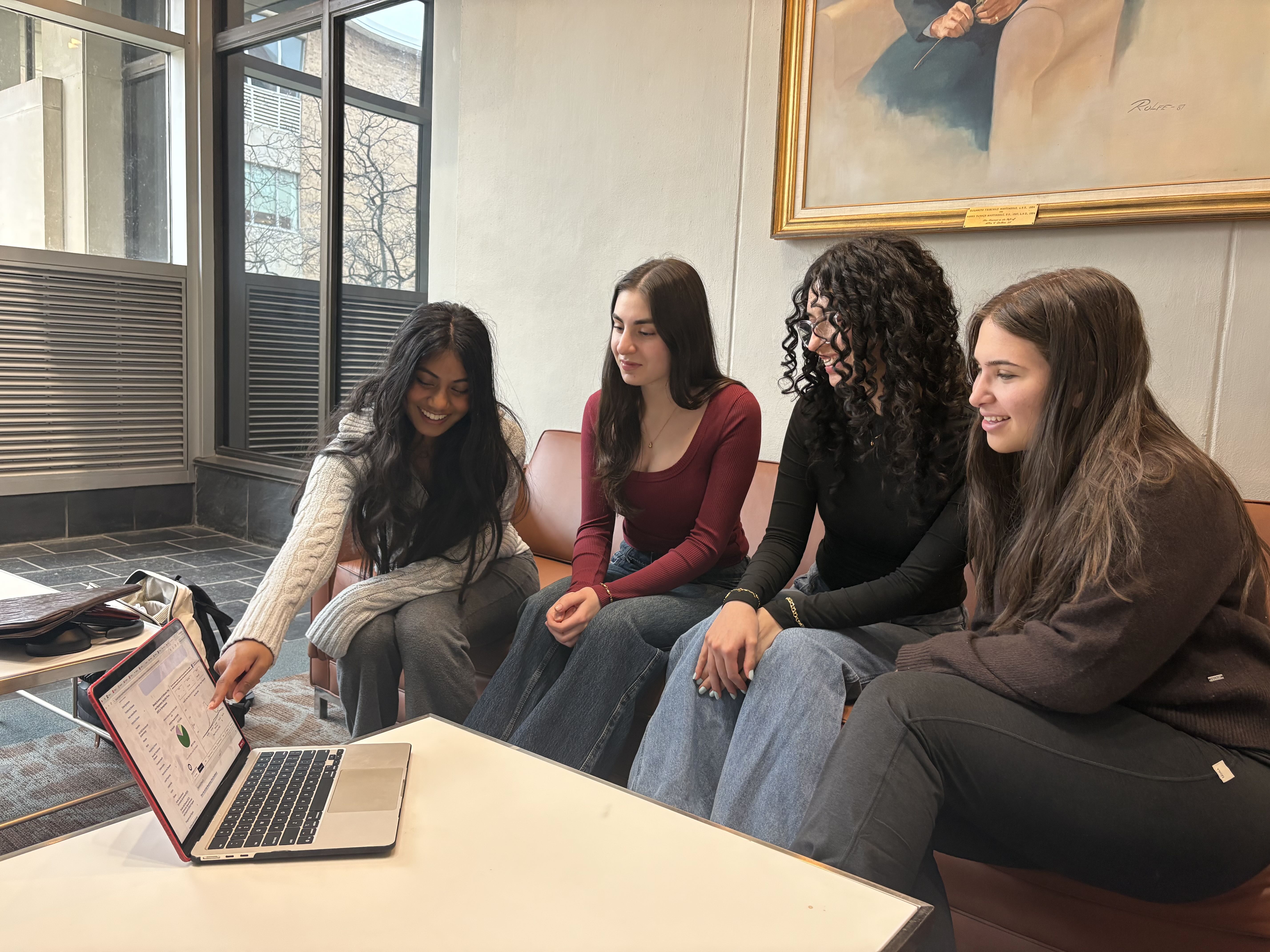
FluCast builds on the research of McAndrew, associate professor of biostatistics and health data science. Earlier updates were delivered through weekly emails featuring five-minute videos, but engagement was low.
At its core, the project focuses on prevention. Students often push through illness while balancing coursework, jobs and extracurricular commitments. FluCast aims to make health trends visible before they become personal setbacks.
“For decades, weather forecasts have helped people plan their day,” McAndrew said. “Our goal with FluCast is to turn complex disease data into simple, actionable information so students can make better decisions about their health and their community.”
McAndrew’s framing reflects the team’s broader vision for FluCast, which aims to make health information part of students’ daily routines.
Bhavanasi said the long-term goal is to make campus health information as familiar and easy to access as a daily weather forecast.
“Our vision is to make health data as easy to check as the weather,” she said. “If students can see that flu cases are rising, they can take precautions before they get sick.”
University students face elevated risks of respiratory illness due to shared living spaces, crowded classrooms and frequent travel. Yet campus health updates often rely on limited data and formats that struggle to capture students’ attention.
“Students are not going to watch a five-minute video about the flu,” Lee said. “We need to meet them where they are.”
This year’s team is rethinking both the data and the delivery. Drawing inspiration from weather forecasting, FluCast will provide short, visually engaging updates that summarize illness trends and offer practical guidance. The project is also expanding beyond influenza to track RSV and COVID trends, providing a broader view of respiratory illnesses affecting the campus community.
Instead of presenting dense statistics, FluCast’s weekly updates will highlight whether cases are rising or falling and offer practical steps students can take to protect themselves and others. Monthly summaries will provide deeper analysis for those who want to explore the data.
“People don’t respond to numbers,” Lee said. “They respond to clear guidance.”
That focus on clarity is central to the team’s communication strategy, said Wajiha Saba ’28.
“The project is about communicating scientific data in a way that students can actually understand,” she said.
Behind the messaging is a technical foundation the team is continuing to build. Students are developing a real-time dashboard that analyzes patterns and identifies rising or declining illness trends. One early challenge has been data reliability. Previous forecasts relied largely on reports from the campus Health and Wellness Center. Yet many students seek care off campus at hospitals, urgent care centers or pharmacies, leaving gaps in campus-based data.
“You can’t generalize four confirmed cases to a campus of 10,000 students,” Bhavanasi said. “We’re working to expand our data sources so our forecasts reflect what’s actually happening in the community.”
To strengthen its data foundation, the team has begun outreach to regional partners including St. Luke’s University Health Network and the Pennsylvania Department of Health. Students are also exploring collaborations with nearby colleges, such as Muhlenberg College, to build a broader picture of illness trends across the Lehigh Valley.
With the dashboard and data partnerships in development, the team is also revamping FluCast’s social media presence and preparing short-form updates for platforms students already use daily. For the students involved, the work has become a hands-on public health laboratory that combines data access, public communication and the challenge of building trust in health information.
“It’s shown me how difficult it is to get people to pay attention to health information,” Bhavanasi said. “But it’s also shown how connected public health networks are. When we reach out, people want to help.”
The long-term vision extends beyond a single campus. Through shared modeling frameworks and cross-campus partnerships, FluCast aims to build a system that other universities could adopt.