
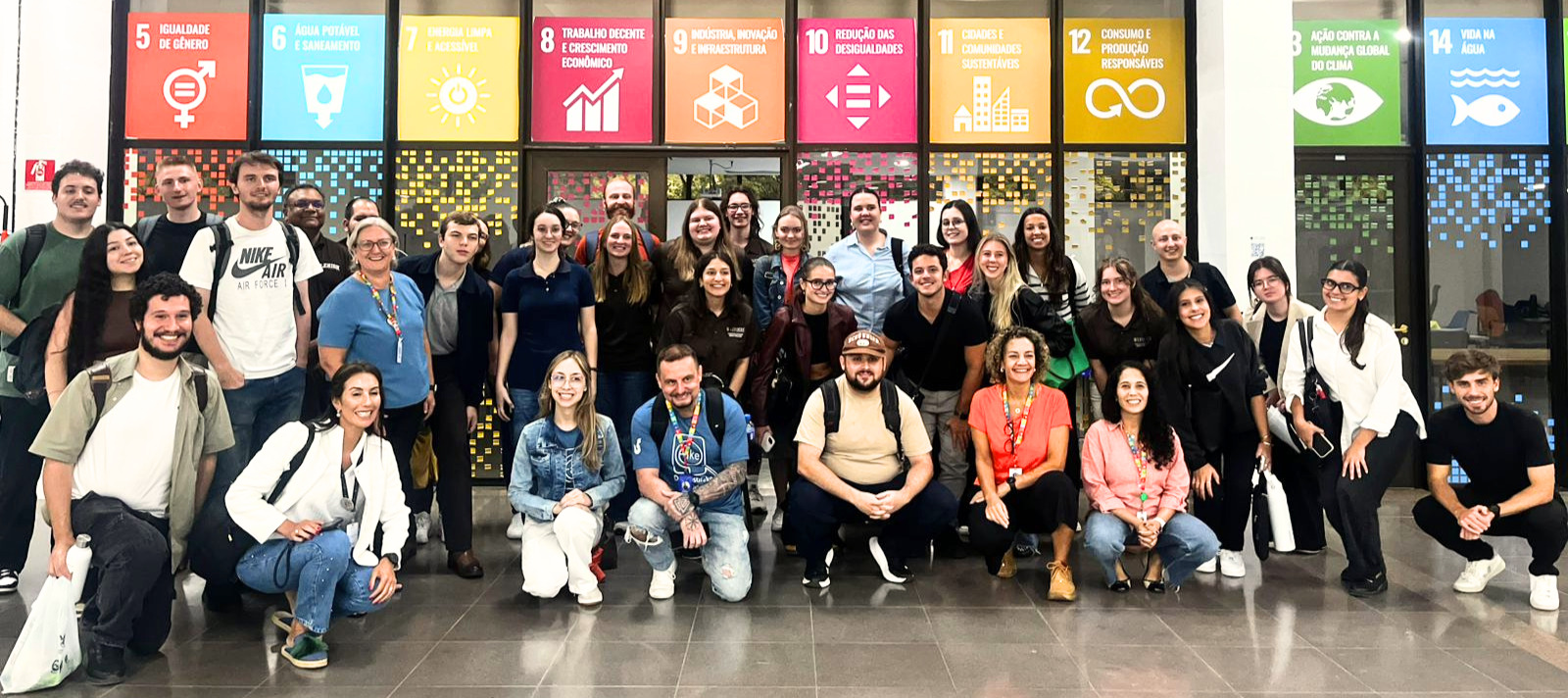
Lehigh University launched a new entrepreneurial leadership program in Brazil, convening students, faculty, and professionals from across the country for an intensive, hands-on experience in innovation and social impact. The initiative was made possible through support from Fulbright Brazil and its Modernization of Undergraduate Education (PMG) program, which advances experiential and globally engaged learning across Brazilian universities. One of Brazil’s premier higher education institutions, the Universidade do Vale do Rio dos Sinos (UNISINOS) in São Leopoldo, served as partner and host for the program.
The Humanitarian Design and Social Enterprise (HDSE) Leadership Intensive took place March 9–13 and brought together 35 undergraduate and graduate students and 10 faculty and staff from institutions across Brazil for a week of collaborative learning and venture development.
The intensive is part of Lehigh’s Creative Inquiry-Iacocca (CI-I) Sustainable Futures Fellowship, a joint initiative of the Office of Creative Inquiry and the Lee Iacocca Institute for Global Leadership. The fellowship prepares selected students who have successfully completed one of Lehigh’s fieldwork-based Impact Fellowships and have remarkable accomplishments resulting from their work—to design and lead immersive, week-long entrepreneurial programs that cultivate socially conscious changemakers.
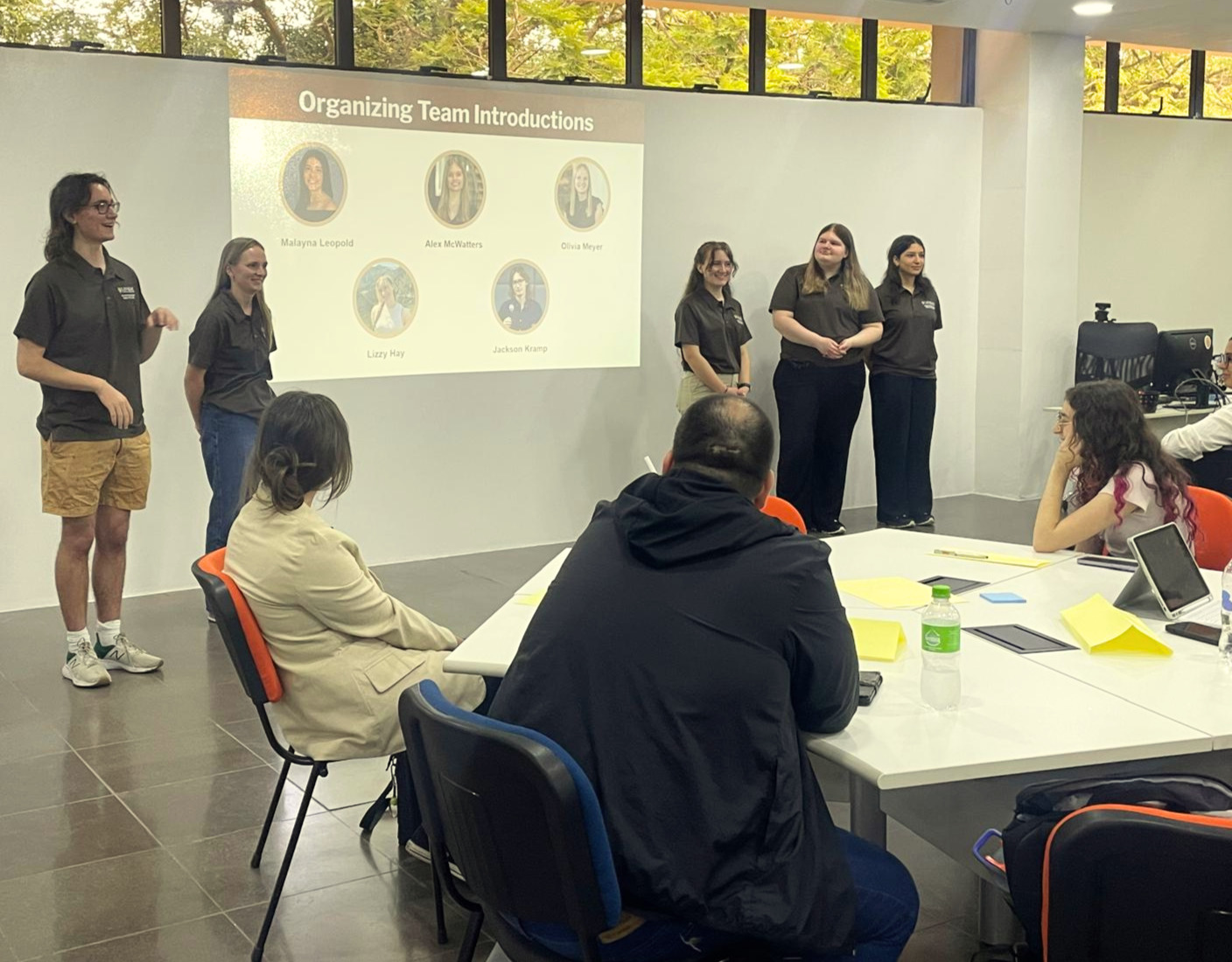
In Brazil, the HDSE intensive was led by CI-I Sustainable Futures Fellows Malayna Leopold ’26, Alexandra McWatters ’27, Olivia Meyer ’27, Lizzy Hay ’27, and Jackson Kramp ’27, who traveled during spring break to facilitate the experience. Their work was supported by faculty mentorship from Khanjan Mehta, Lehigh’s vice provost for Creative Inquiry, and developed in close partnership with professional educators from UNISINOS and Fulbright Brazil.
Over the five-day workshop, the HDSE Leadership Intensive engaged its participants in interdisciplinary teams working on challenges in health, education, food, water, energy, and climate. Through a rigorous curriculum of interactive workshops rooted in team discussions and project development, participants progressed from identifying and understanding complex global problems to developing venture concepts with real-world potential. The program culminated in final juried presentations, where teams showcased the solutions and venture frameworks they had developed during the intensive.
For Mehta, the program represents both a significant partnership and a broader investment in developing future changemakers across borders.
“What makes this program special is that our students were not just learning; they were truly leading. They designed the curriculum, mentored and sparred with teams, and worked side by side in a spirit of genuine co-creation with incredibly talented students and faculty in Brazil. When you put young people in positions of real responsibility, in a country as vibrant and complex as Brazil, the learning and the impact are both extraordinary. It is especially meaningful to do this work in the land of Paulo Freire, where education has long been seen as a tool for empowerment, agency, and social transformation.”
UNISINOS Rector Sergio Eduardo Mariucci and Provost Gustavo Borba were among the faculty, staff and external partners who supported the intensive and engaged with participants throughout the week.
“I believe this partnership is essential to ensure the development of transversal competencies, especially cross-cultural understanding,” Borba said. “From the moment we are able to bring together people from different backgrounds and places, we can capture the essence of a more systemic perspective. I think that providing this to our students is exactly what the HDSE made possible.”
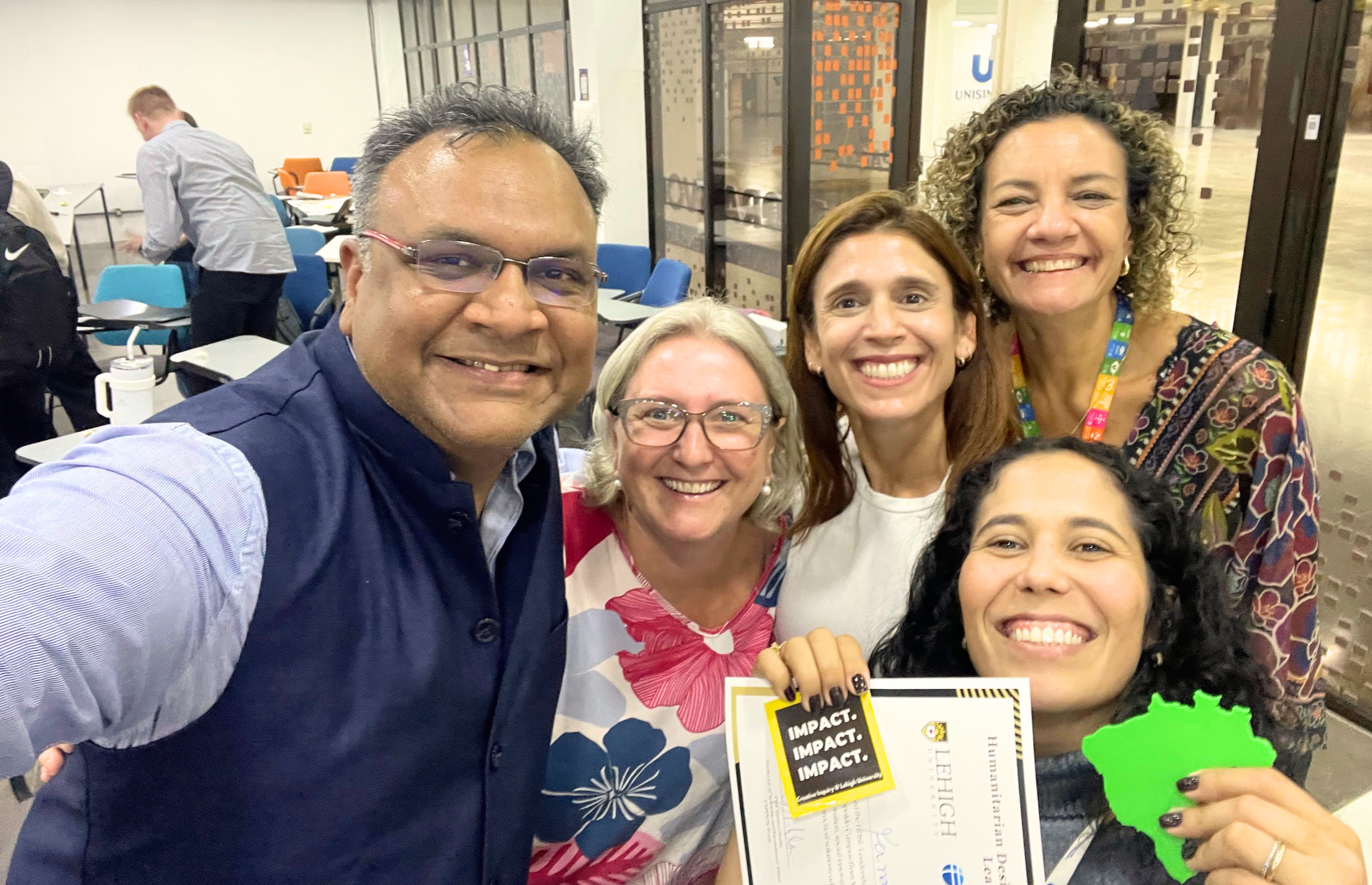
“Having the HDSE Leadership Intensive at UNISINOS was an incredible experience,” Fernanda Pacheco, manager of the Polytechnic School at UNISINOS, said. “Our students had the opportunity to engage with the methodology proposed by Prof. Mehta and his team, moving through moments of reflection and ideation around global challenges and reaching the stage of developing business plans with potential solutions.”
Most participants arrived with limited experience in social entrepreneurship or venture development, and by the end of the workshop, they had gained hands-on experience advancing early-stage ideas toward viable solutions while working in interdisciplinary teams.
The five ventures developed during HDSE reflected that range of thinking: SkillBridge addressed the lack of soft-skill training in Brazilian schools and its effect on employment opportunities for young people; SEPHA proposed an AI health monitor to help reduce preventable hospitalizations; Step Up focused on connecting immigrants in Rio Grande do Sul with better-paying jobs that match their qualifications; SHAPE promoted nutrition and health literacy for young adults through a peer-to-peer mentoring model; and Eco Points aimed to reduce flood risks in Rio Grande do Sul by encouraging proper trash disposal through rewards tied to local business discounts and cash back.
Amanda Fraga Röpke, one of the participants, said the week’s value extended beyond learning.
“Beyond the technical knowledge, what made the experience especially meaningful were the conversations, connections and sense of community that emerged throughout the journey,” Röpke said.
Over the course of the week, those connections grew stronger, and participants developed into more collaborative and confident teams.
The workshop also required adaptability. Language differences and varying levels of English fluency challenged the Lehigh team to adjust its teaching strategies in real time, making the experience more flexible and inclusive. Rather than slowing the work, those adjustments became part of what made the week especially rewarding for the student leaders.
“It was especially rewarding to see how much the participants grew over the week,” Kramp said. “Their ideas matured from broad interests into actual products or systems they could implement, and hearing their appreciation afterward made that progress even more meaningful.”
Additional CI-I Sustainable Futures Fellow-led HDSE Leadership Intensives are planned for Kazakhstan in May and for India and the Philippines in July, with two workshops planned for all three locations.