
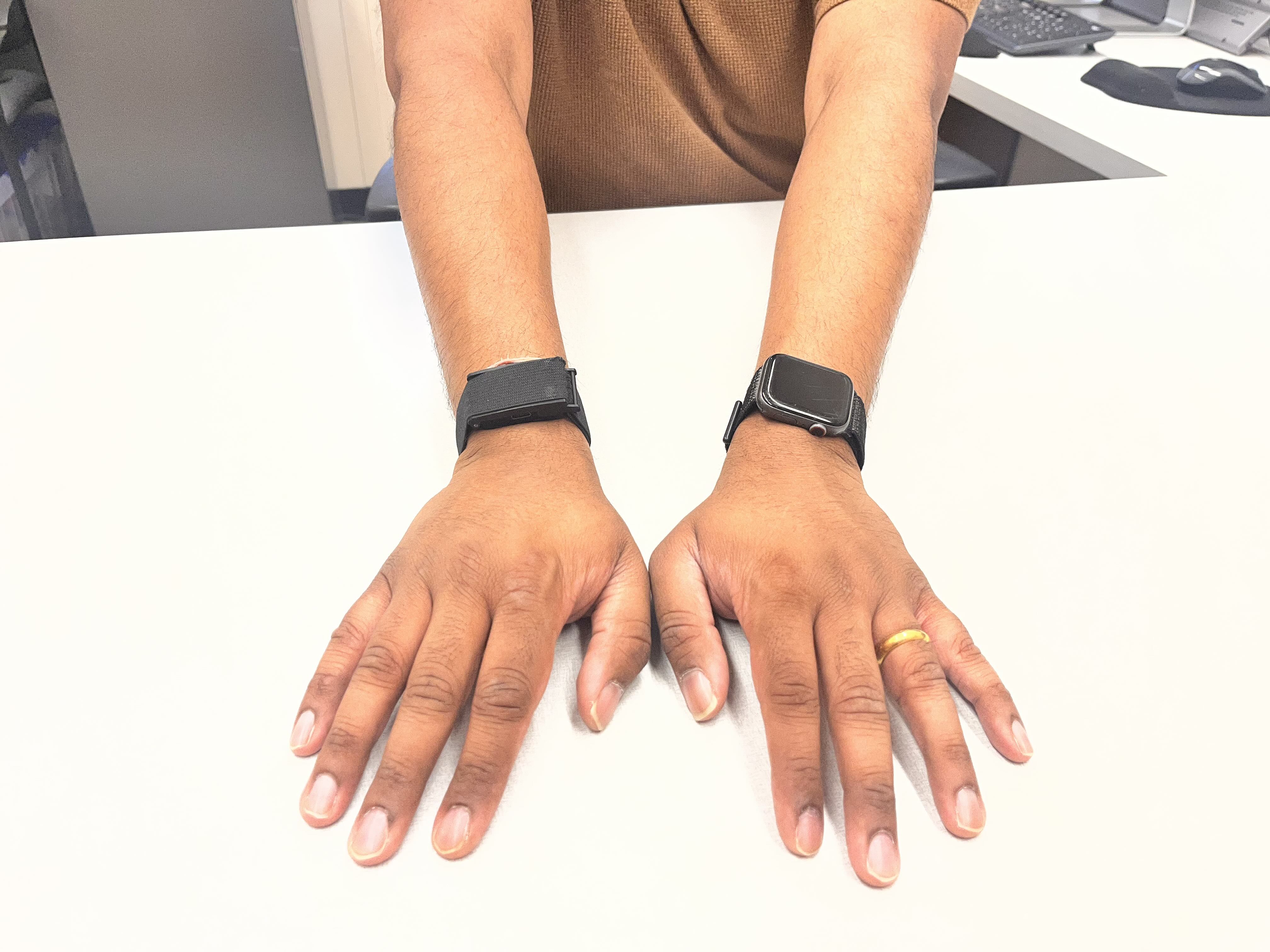
For patients with Parkinson’s disease, tremors can change throughout the day. A short visit with a clinician may capture only a small part of what a patient experiences, leaving doctors to rely on patient recollection, brief physical tests and subjective reports when making decisions about medication and care.
TremorTrack, a Global Social Impact Fellowship project at Lehigh University mentored by Dhruv R. Seshadri, assistant professor of bioengineering, is developing a low-cost wearable device and digital platform to help clinicians monitor Parkinson’s symptoms more continuously and objectively, track medication effects and better understand a patient’s symptoms over time.
The 2026 TremorTrack Impact Fellows, Jude Gibson-Thoele ’29, a mechanical engineering major; Priya Mancheril ’29, a chemical and biomolecular engineering major; Anya Mecci ’29, a neuroscience major; Ada Morris ’28, an IDEAS major; Sameer Moudgal ’28, an arts and engineering double major; and Andrew Spichak ’29, an electrical engineering major, traveled to Almaty, Kazakhstan, in May for two weeks of fieldwork. There, they tested the device, met with clinicians and patients, and gathered feedback that will shape the next stage of development.
The team is also supported by 2025 Impact Fellows Emma Jovanovic ’27, a bioengineering major, and Tiya Patel ’27, a population health major, who are continuing their work on the project this year.
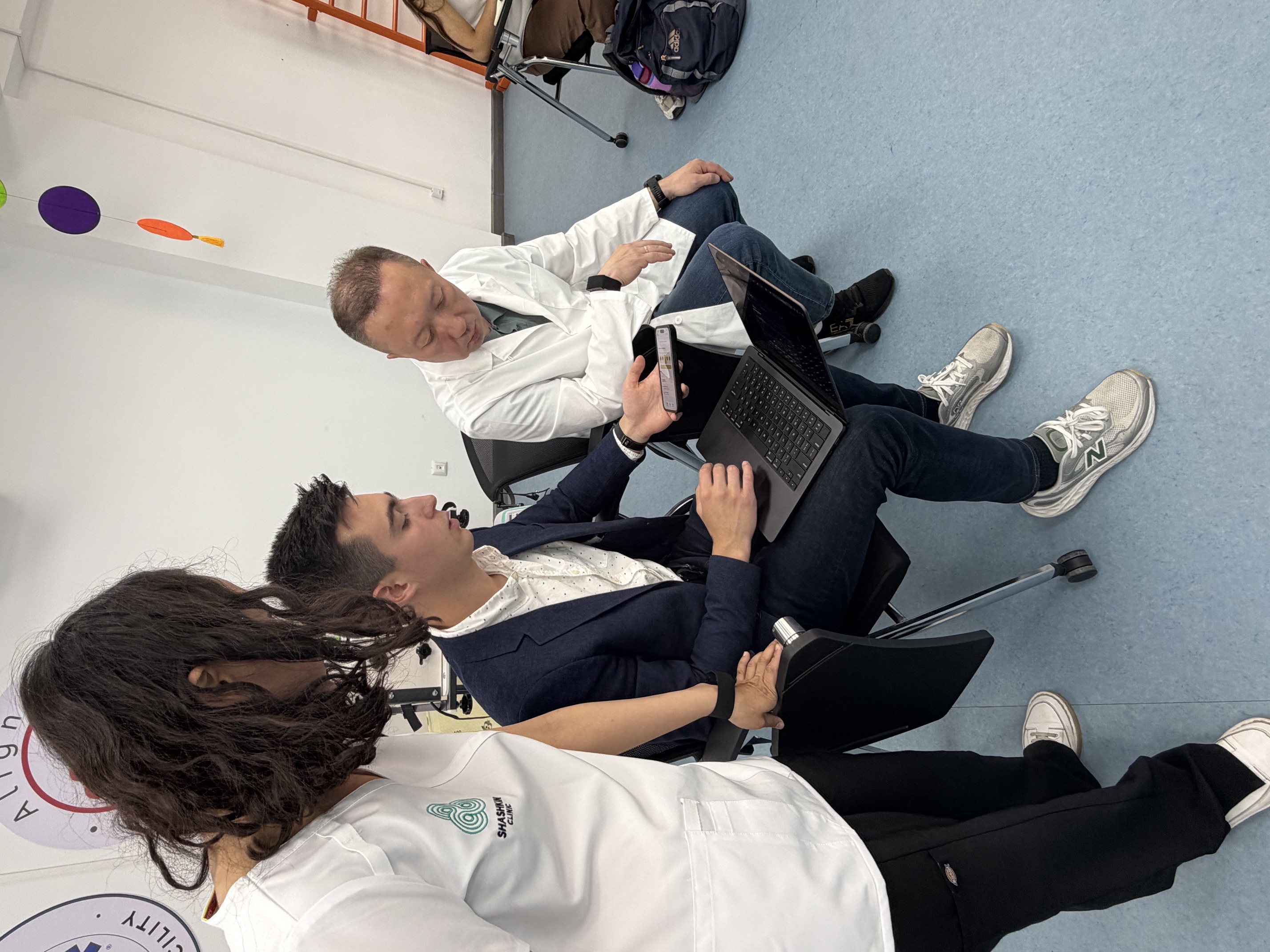
The project recently reached an important milestone through an invention disclosure filed with Lehigh University’s Office of Technology Transfer, marking a step toward moving the technology from research and prototyping toward real-world clinical use.
At the center of the project is a discreet wrist-worn device equipped with sensors that detect movement across different axes. The device uses accelerometers and gyroscopes to monitor tremor activity and grade tremors based on severity. A companion app and clinician dashboard are designed to allow patients and doctors to view symptom trends, medication timing and tremor data. The team is also working to incorporate a heart-rate sensor and educational tools, including an AI assistant that can answer basic questions about Parkinson’s disease.
For Gibson-Thoele, the value of the device lies in its ability to give clinicians a fuller picture of a patient’s symptoms beyond a single appointment.
“Currently we are focusing on Parkinson’s disease,” Gibson-Thoele said. “The device records tremors 24/7 and grades tremors based on severity. This data is then sent to the patient’s doctor, who can review their recent tremors and change medication, request appointments, etc.”
That continuous monitoring could help address one of the challenges in Parkinson’s care: symptoms at an appointment may not reflect what a patient experiences throughout the day.
“Often when patients come into their appointments, their tremors might be worse than usual due to anxiety, or they might not be as bad at that time,” Gibson-Thoele said. “The device allows doctors to have a better idea of what their tremors are like overall, helping them not underdose or overdose the patient.”
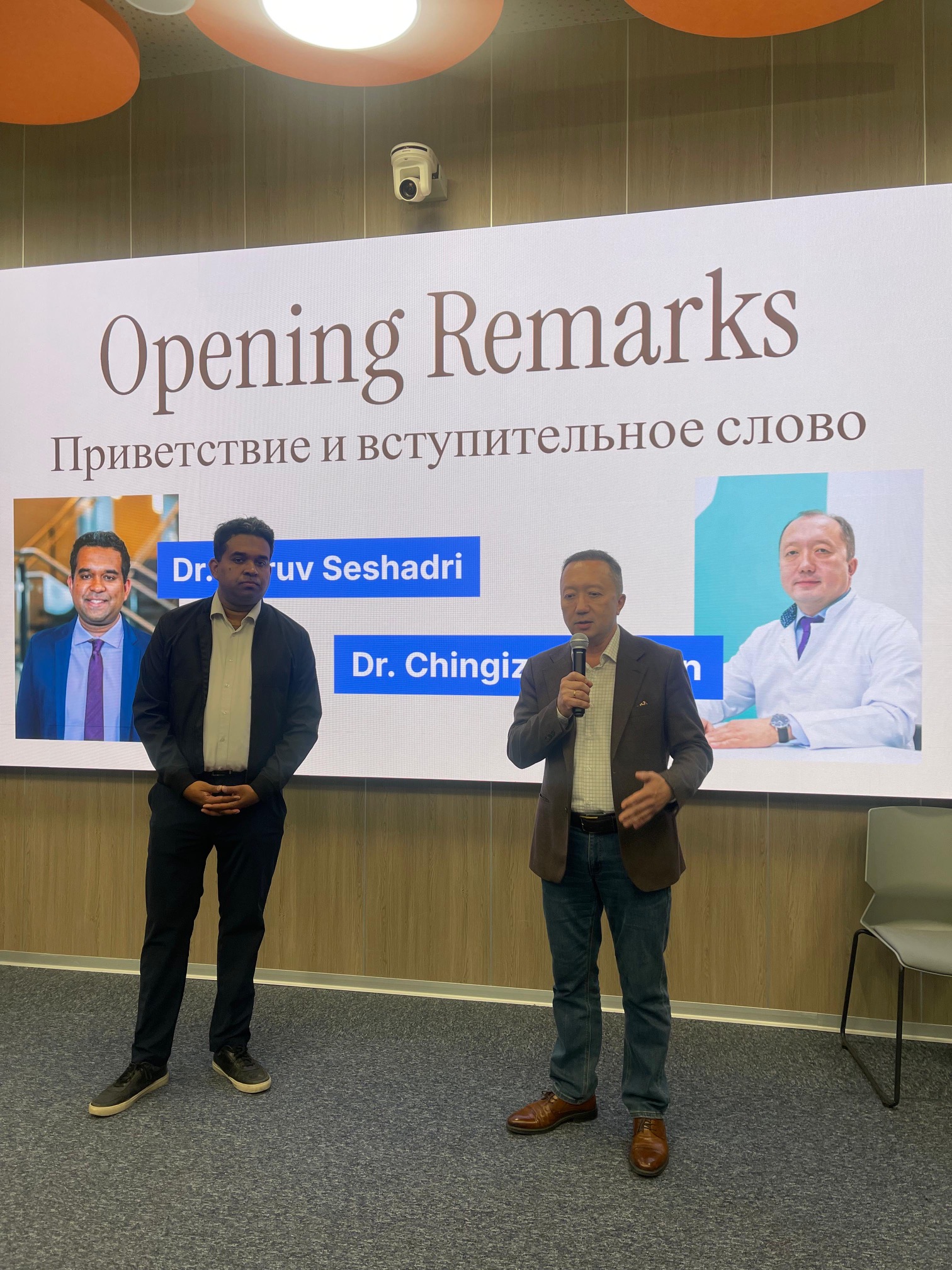
During fieldwork, the team worked closely with Dr. Chingiz Shashkin, founder and owner of Shashkin Clinic, a leading neurosurgery center in Almaty. The partnership gave students direct exposure to clinical practice and helped them understand how the device could fit into patient care.
Students visited the clinic, observed patients with movement disorders, demonstrated the device and app, and learned from clinicians about Parkinson’s care. They also observed procedures related to Parkinson’s treatment, including deep brain stimulation and ablation surgeries.
The fieldwork also helped the team see how TremorTrack could support medication management. In one example, the device was used to monitor tremor activity before and after a patient took medication. The data showed a decrease in tremor activity after the medication took effect, while also capturing later tremor spikes.
For Seshadri, that kind of objective data could eventually help clinicians evaluate how well a medication is working and whether a patient’s dosage may need adjustment.
“The patient voice is important, but how do we get objective data to show if a medication is truly improving outcomes?” Seshadri said. “Instead of asking, ‘How are you feeling?’ a clinician could look at the data and say, ‘The dosage is working, but there may need to be some optimization.’”
The feedback gathered in Almaty is now guiding the team’s next stage of development. As TremorTrack moves beyond its minimum viable product, the team is working to improve the device’s design, packaging, manufacturing pathway and digital platform. This summer, the students are focused on making the device more comfortable, accurate and market ready, and developing a new algorithm to filter out everyday motion and improve tremor tracking.
Future work may include additional testing through Good Shepherd Rehabilitation in Pennsylvania and continued collaboration with Shashkin Clinic in Almaty. The team hopes to send additional devices to Kazakhstan so testing and feedback can continue beyond Lehigh’s annual fieldwork window.
Starting in fall 2026, Seshadri will serve as a visiting professor in the Department of Neurology at the Institute for Postgraduate Studies in Almaty, where Shashkin serves as department chairman. The role will further strengthen Lehigh’s research and clinical partnerships in Kazakhstan and support continued testing of TremorTrack beyond the annual fieldwork period.
The long-term goal is to move TremorTrack toward use in Kazakhstan, with potential future expansion into other countries where clinical partnerships can support testing, validation and implementation.
Through its partnership with Shashkin Clinic and its fieldwork in Kazakhstan, TremorTrack is moving closer to a future where patients with Parkinson’s disease and their clinicians can make care decisions with more continuous, objective and accessible data.