
Three students from Ashoka University in Sonipat, Haryana, India, near New Delhi, are in Bethlehem this year for Lehigh University’s Mountaintop Summer Experience through the Office of Creative Inquiry. Adya Reddy, Anam Ahamed and Samip Dahal are working with Lehigh faculty mentors and students on impact-focused projects ranging from adolescent psychology to digital learning, technology to the new student experience.
For the past five years, Ashoka students have brought perspectives from one of India’s leading liberal arts universities to Mountaintop project teams. This year’s students are continuing that exchange through projects that ask timely questions: how young people navigate online and offline relationships, how technology can ease the transition to college, and how adolescent learners can develop skills to become stronger entrepreneurial thinkers and doers.
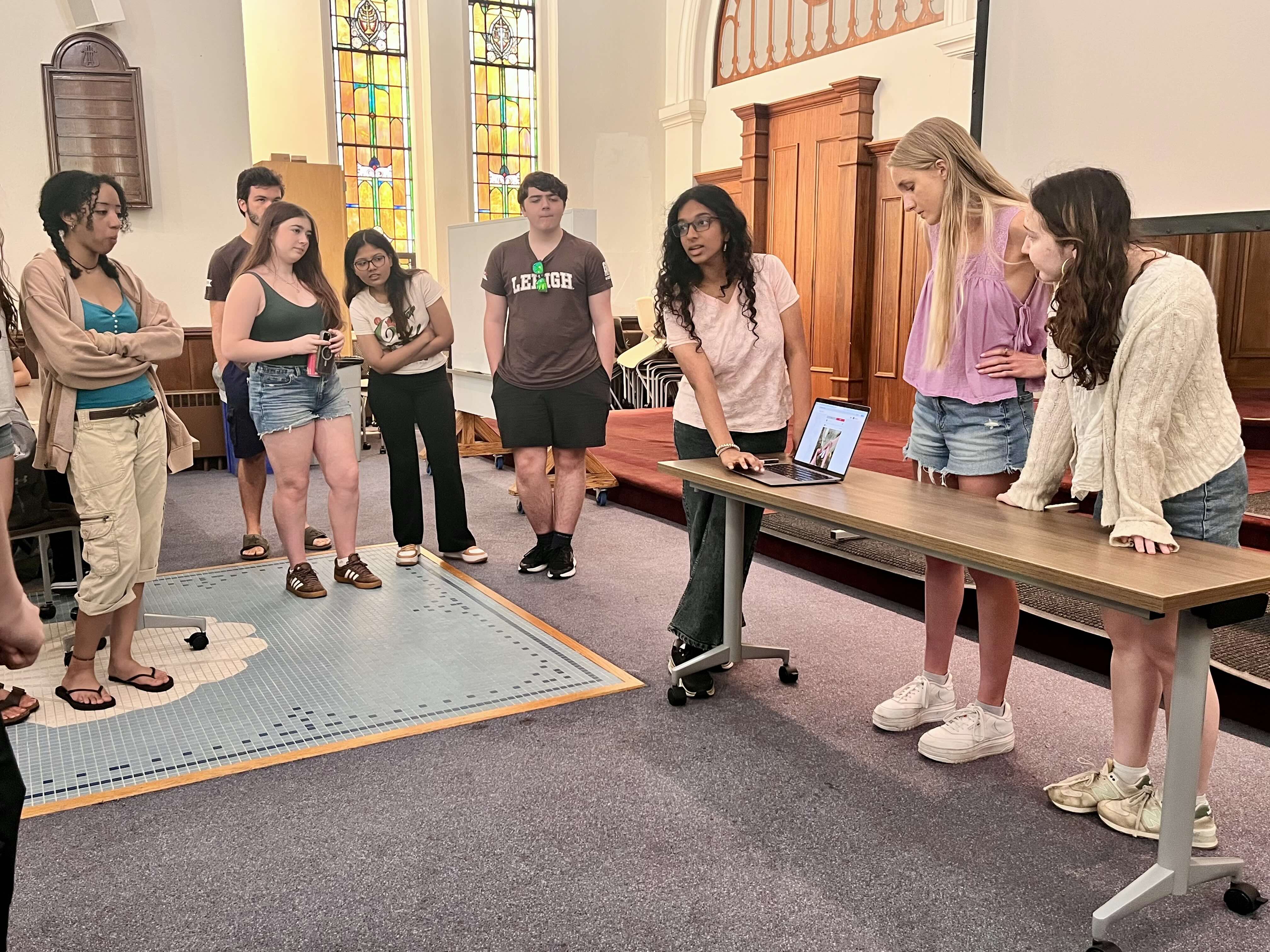
Reddy, a psychology major entering her final year at Ashoka, is part of “An Integrative Approach to Studying Adolescents’ Online and Offline Social Lives,” a NextGen Impact Fellowship project mentored by Sarah Borowski, assistant professor of psychology. The project examines how adolescents’ experiences with technology and social media intersect with their friendships, relationships and well-being.
This summer, Reddy is working with Mountaintop Fellows Carly Pham ’28 and Ava Smith ’28, both psychology majors, to study data sets from India and the United States. The team is examining how adolescents describe positive and negative experiences they might share online, what they choose to disclose, and how they would present those experiences through images and captions.
For Reddy, the project offers a chance to experience the daily rhythm of a psychology research lab in a United States R1 university, an opportunity that is especially meaningful as she considers returning to the U.S. for graduate study.
“I want to pursue academia, and I was looking for an experience that could show me what working in a research lab is really like,” Reddy said. “As an undergraduate, this kind of opportunity is hard to find, and it has given me a clearer sense of what graduate study in the U.S. could look like.”
Reddy also saw what the experience could lead to through Radha Kautavarapu, an Ashoka student who joined Borowski’s Mountaintop team in summer 2024 and continued working with the project remotely after returning to Ashoka.
For Borowski, Kautavarapu’s continued involvement showed how international student collaborators can bring new questions and directions to a research project.
“Radha had the brilliant idea to also collect data with Indian adolescents to examine cross-cultural differences,” Borowski said. “In addition, she added a qualitative piece to the project, asking adolescents why they would or would not disclose. The findings turned out to be very interesting, and we are working this summer on publishing the work.”
Kautavarapu’s Mountaintop work later grew into her honors thesis and helped shape her academic path.
“This would not have been possible without the Mountaintop program,” Kautavarapu said. “It has shaped my research career in every way possible and made me want to be a researcher.”
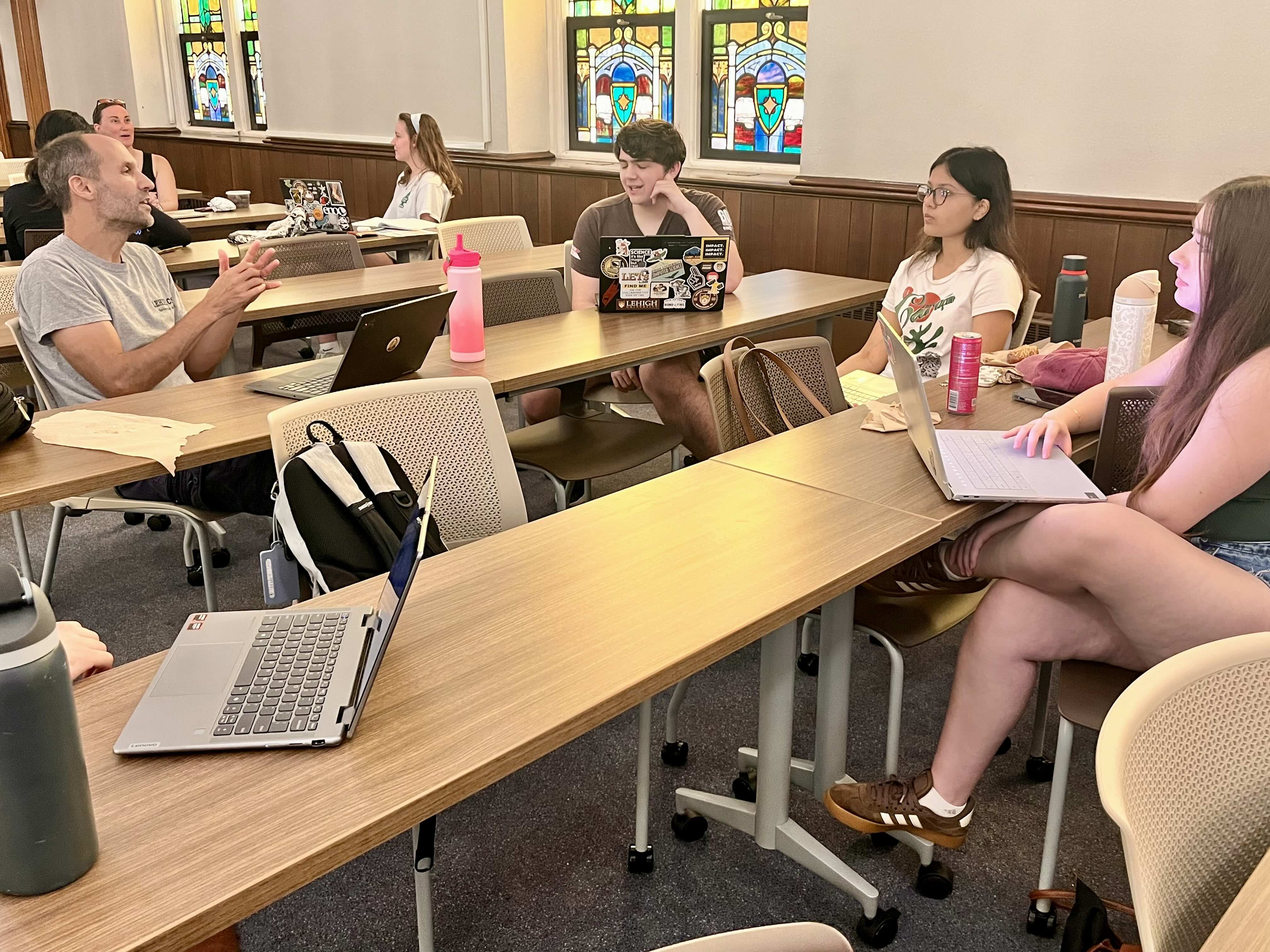
Ahamed, a rising senior double majoring in computer science and mathematics, is part of “Leveling Up to Lehigh Life,” a project mentored by Michael Spear, professor of computer science and engineering. The team, which also includes Mountaintop Fellows Theodore Spear ’28, a biology major; Sarah Taylor ’29, an IDEAS major; and James Goodwin ’29, a computer science and engineering major, is developing a video game to help incoming first-year students get to know Lehigh before they arrive on campus.
The game is designed to make the transition to college less overwhelming by allowing students to explore campus, learn about resources and complete “quests” in a virtual Lehigh campus environment. It is expected to launch in August to benefit Lehigh’s incoming Class of 2030.
Ahamed’s work includes backend session tracking, which helps the team understand how long players spend in different parts of the game and how engaged they are. She is also reviewing studies on digital orientation tools as the team prepares to evaluate how the game affects students’ familiarity with Lehigh, sense of belonging and confidence before they arrive.
The project feels personal for Ahamed, who is learning Lehigh’s campus for the first time herself.
“When I arrived from India, I didn’t know Lehigh’s campus, its academic buildings or even how hilly the walk could be,” Ahamed said. “This game has been a helpful way for me to get to know Lehigh, and I can see how it could help incoming students feel more prepared before they arrive.”
While Ahamed’s work focuses on helping students find their footing at Lehigh, Dahal, a rising junior majoring in economics and finance, has spent his Mountaintop experience preparing young people for a changing economy.
Dahal is part of The Human Edge: Global Entrepreneurial Leadership, a project that explores how entrepreneurial education can help underserved youth build the skills AI cannot replace, including creativity, resilience, communication, critical thinking and collaboration. The team recently returned from fieldwork in the San Francisco Bay Area, where it worked with schools and youth-serving organizations on a one-day workshop that helps high school students explore their values, identify real-world problems, develop venture ideas and pitch solutions.
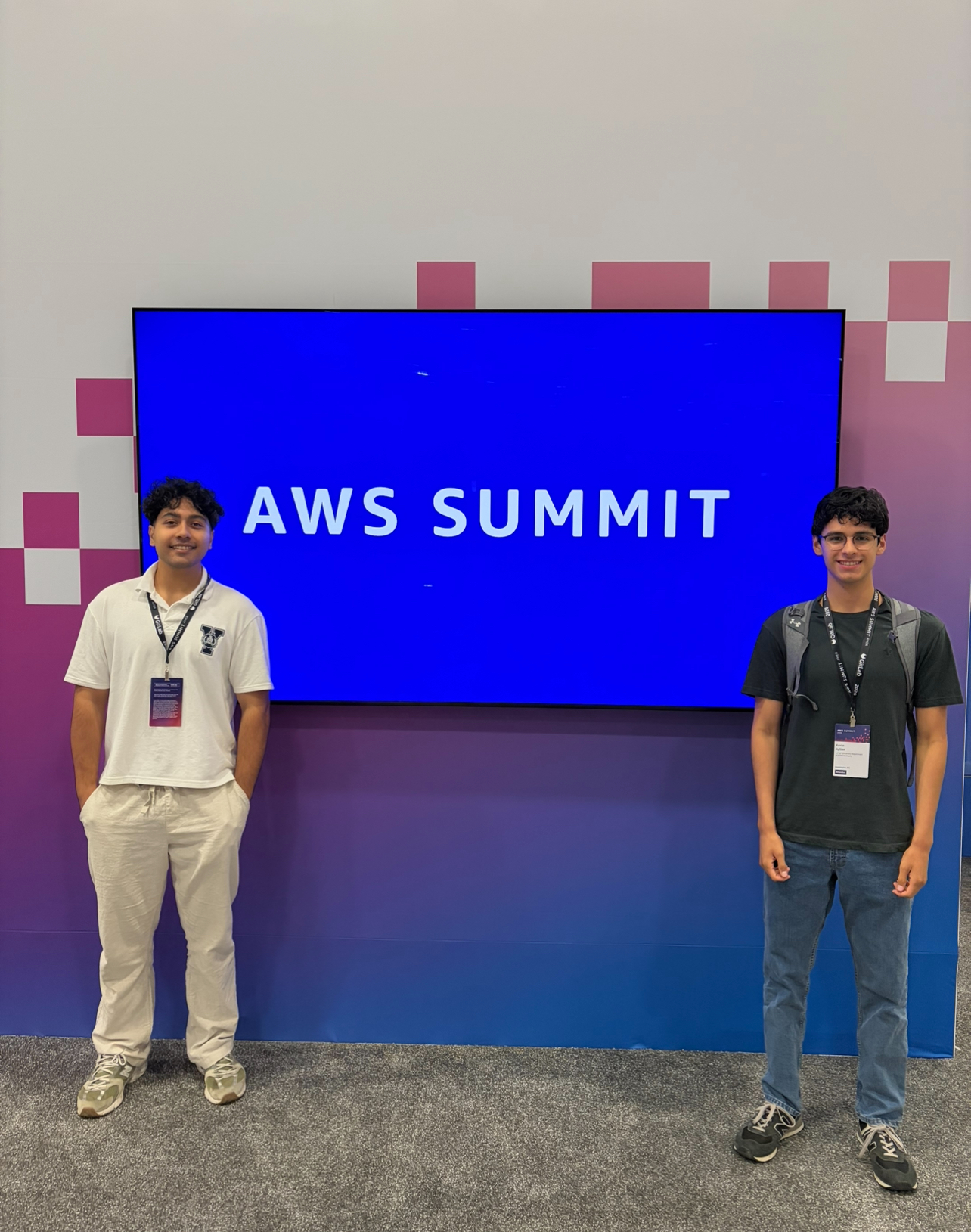
That work has disseminated beyond the Bay Area. Dahal and teammates Kevin Ayllon Gaytan ’29, an accounting major, and Larah Flavier ‘29, a political science and economics major, presented the team’s research paper at the International Council for Small Business World Congress. They also attended the AWS Summit in Washington, D.C., where they introduced their project to professionals, founders, researchers, engineers and students.
At the summit, they gathered feedback on their early-stage platform and tested their ideas with people outside the project team.
“The conversations gave us valuable insights into both the technical and practical sides of building our platform,” Dahal said. “We are already working to incorporate many of the suggestions we received into the project.”
Beyond their project work, the students are also getting a firsthand look at life at Lehigh and in Bethlehem. Ahamed has made Linderman Library a favorite campus spot, while Dahal said he has enjoyed exploring Bethlehem and its history. Reddy said Borowski connected her with other professors for conversations about graduate school, helping her think more clearly about her next steps.
“The professors here have been really great,” Reddy said. “Everyone has been really welcoming, and they all seem very invested in helping you.”
For Stacy Burger, director of global partnerships and strategic initiatives in the Office of International Affairs, the students’ experiences reflect the value of Lehigh’s long-running relationship with Ashoka University.
“Our collaboration with Ashoka University has been mutually enriching, fostering meaningful academic and cultural exchange since 2018,” Burger said. “We are delighted that Ashoka students actively participate in our summer programs, contributing diverse perspectives and academic excellence to the robust and interactive academic experience.”
Bill Whitney, assistant vice provost for experiential learning programs, said the Ashoka-Lehigh collaboration also strengthens Mountaintop project teams.
“Each year, we are privileged to have Ashoka students working with us through the Mountaintop program,” Whitney said. “They are brilliant, committed to global impact, and high-level collaborators, and they raise the bar of accomplishment for Lehigh’s students while gaining critical research and entrepreneurial experience. This is a win-win partnership for both institutions.”
Through the Mountaintop Summer program, the partnership continues to give students opportunities to learn across borders, contribute to interdisciplinary projects, and build connections that can last well beyond one summer.