
Across India, Kazakhstan and Lehigh’s campus, Impact Fellowship teams are exploring how research, design and technology innovation can support well-being by helping people learn, make healthy choices and engage with the environments around them.
For a child in India, that might mean using a hands-on experiment to better understand and deal with climate change. For a student in Kazakhstan, it could mean developing sustainable habits through a mobile game. On Lehigh’s campus, it might be finding a walking route that makes it easier to spend time outdoors.
Three projects - “Climate Heroes - Science Kits for Empowering Climate Change Solutions,”, “Save Tuba - Gamifying Sustainability Education for Kazakhstan’s Youngest Learners,”, and “Mindful Steps into the Forest – Expanding Accessible Nature Engagement Across Real and Virtual Environments” - address different global challenges, but each is working to turn research into practical tools for improving everyday lives.
Through Lehigh University’s Impact Fellowship program, students from different disciplines work with faculty mentors and external partners, taking on research, design, testing, community engagement and fieldwork as projects become real social ventures.
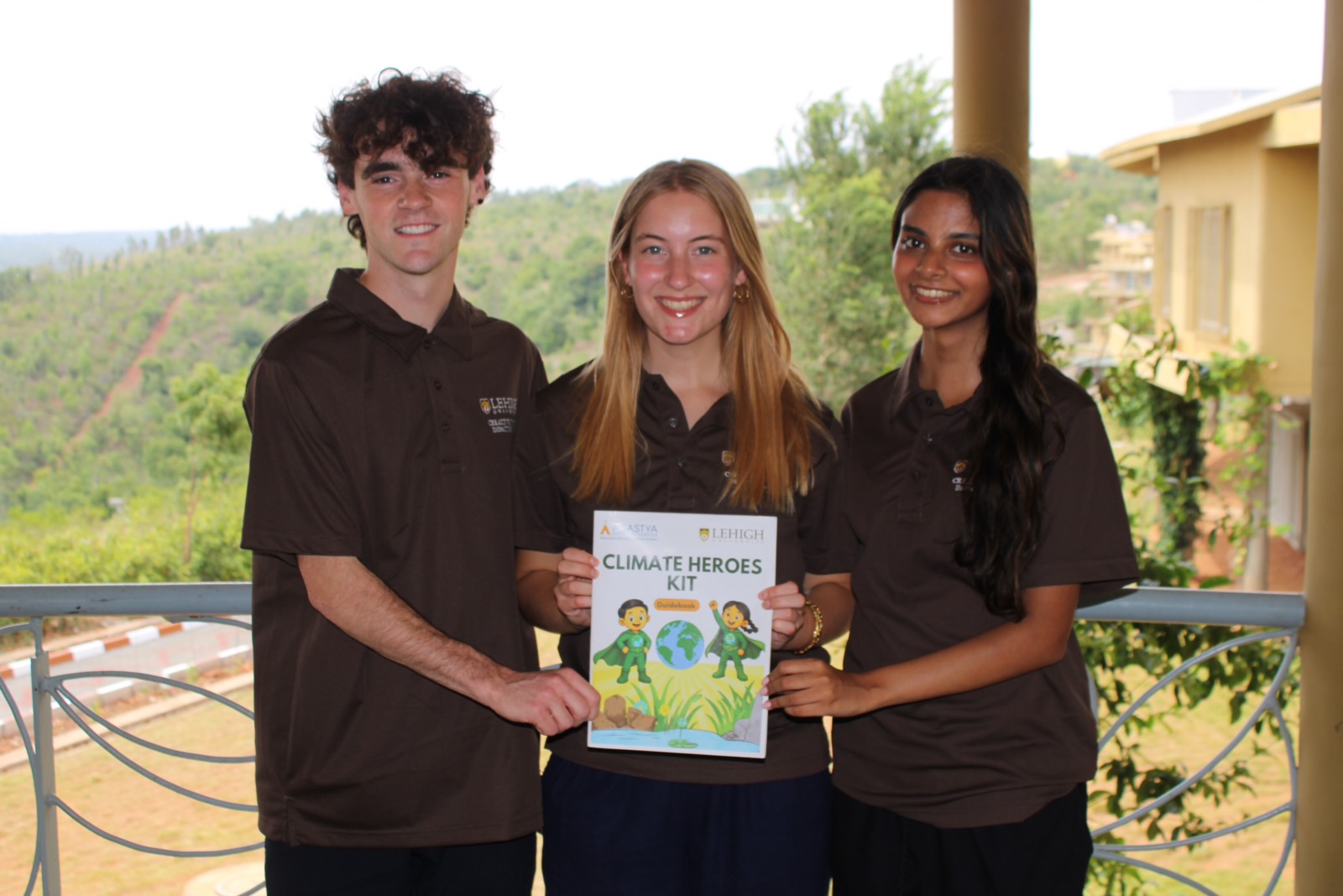
For the Climate Heroes project team, supporting well-being begins with helping students learn and gaining knowledge that empowers scientific solutions to the real and increasing effects of climate change in India.
Working with the Agastya International Foundation, the Global Social Impact Fellowship team developed the Climate Heroes Science Kit and an accompanying workbook, which includes 20+ hands-on experiments designed for students in grades five through eight. The 2026 team, Ayona Bhadury ’29, Will Kaplan ’29, and Jing Williams ’29, is mentored by Bill Whitney, assistant vice provost for Experiential Learning Programs.
During three weeks of fieldwork in southern India in July, the fellows tested the kit with dozens of students and teachers and visited government, private and night schools to learn more about how climate topics are taught.
Rather than simply demonstrating a finished product, the fellows watched how students approached the experiments, where they became confused and which activities captured their attention. The team used that feedback to refine the kit and workbook with Agastya’s academic team.
The next step is to pilot the kits in government schools, measure their impact and eventually make them available to more students.
“Seeing students engage with something our team had created made the impact of our work feel much more tangible,” Bhadury said. “It also showed me how important it is to design solutions alongside the communities they are intended to serve rather than making assumptions about what will work.”
In Kazakhstan, the Save Tuba project focuses on how what students learn can shape the choices they make in everyday life.
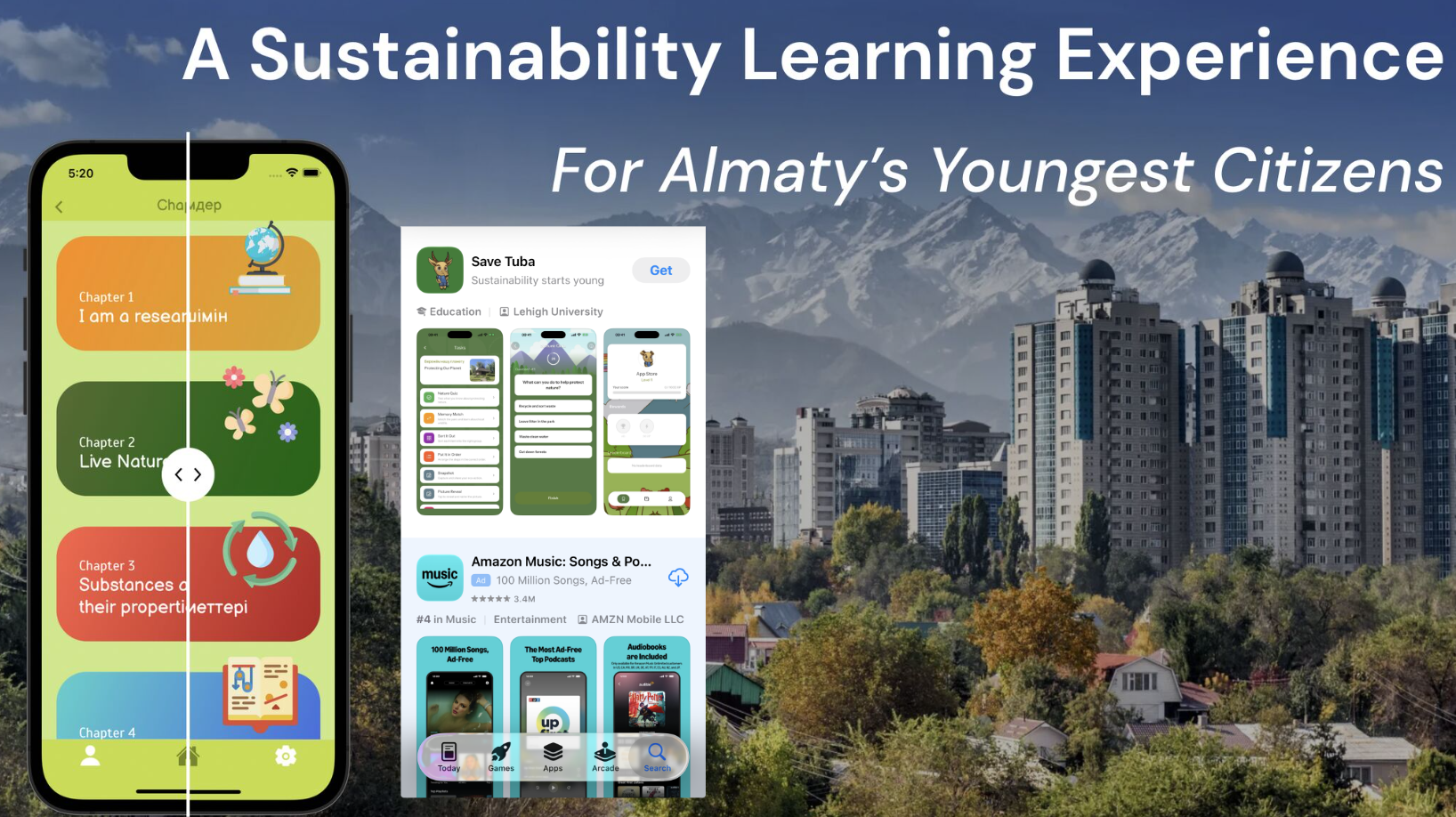
Save Tuba is a mobile educational game for children ages 8 to 11 that teaches sustainability through interactive lessons, games and challenges. The current team includes continuing fellow Alnur Sagat ’28 and 2026 Impact Fellows Mari Hanson ’28, Isabelle Marquis ’29, Ahmad Suleiman ’29 and Guranaad Kaur ’28, and is mentored by Khanjan Mehta vice provost for Creative Inquiry.
Users can download Save Tuba from the Apple App Store and Google Play and use the app in Kazakh, Russian or English. “Tuba,” the game’s mascot, is a saiga antelope native to the Kazakh steppe, who guides players through lessons and activities on recycling, resource conservation, endangered species and other sustainability topics.
Developed with partners including Abai Kazakh National Pedagogical University and Almaty Management University, Save Tuba has evolved through years of curriculum development, app design and field testing.
During the team’s most recent fieldwork in Almaty, the team worked with university partners to prepare the app for classroom use and received approval from Kazakhstan’s Ministry of Education to pilot Save Tuba in eight schools across Almaty. The fellows and their partners also trained 30 teachers from participating schools in a focus group held on the campus of Abai University.
With the classroom pilot underway, the team is now studying how teachers and students use the app and what the evidence shows about its effectiveness.
“Having Save Tuba move into classrooms has been one of the most meaningful parts of my time at Lehigh,” Sagat said. “Because I’m from Kazakhstan, it means a lot to know that kids back home are learning about their environment through something we built. I also learned that building the app was only one part of the work. Getting it into classrooms required listening to teachers, working across two cultures and three languages, and making sure it actually worked for the people using it.”
Through the Campus Social Impact Fellowship, the Mindful Steps into the Forest project explores another dimension of well-being: how people experience the physical environments around them and the benefits of utilizing nature on a university campus.
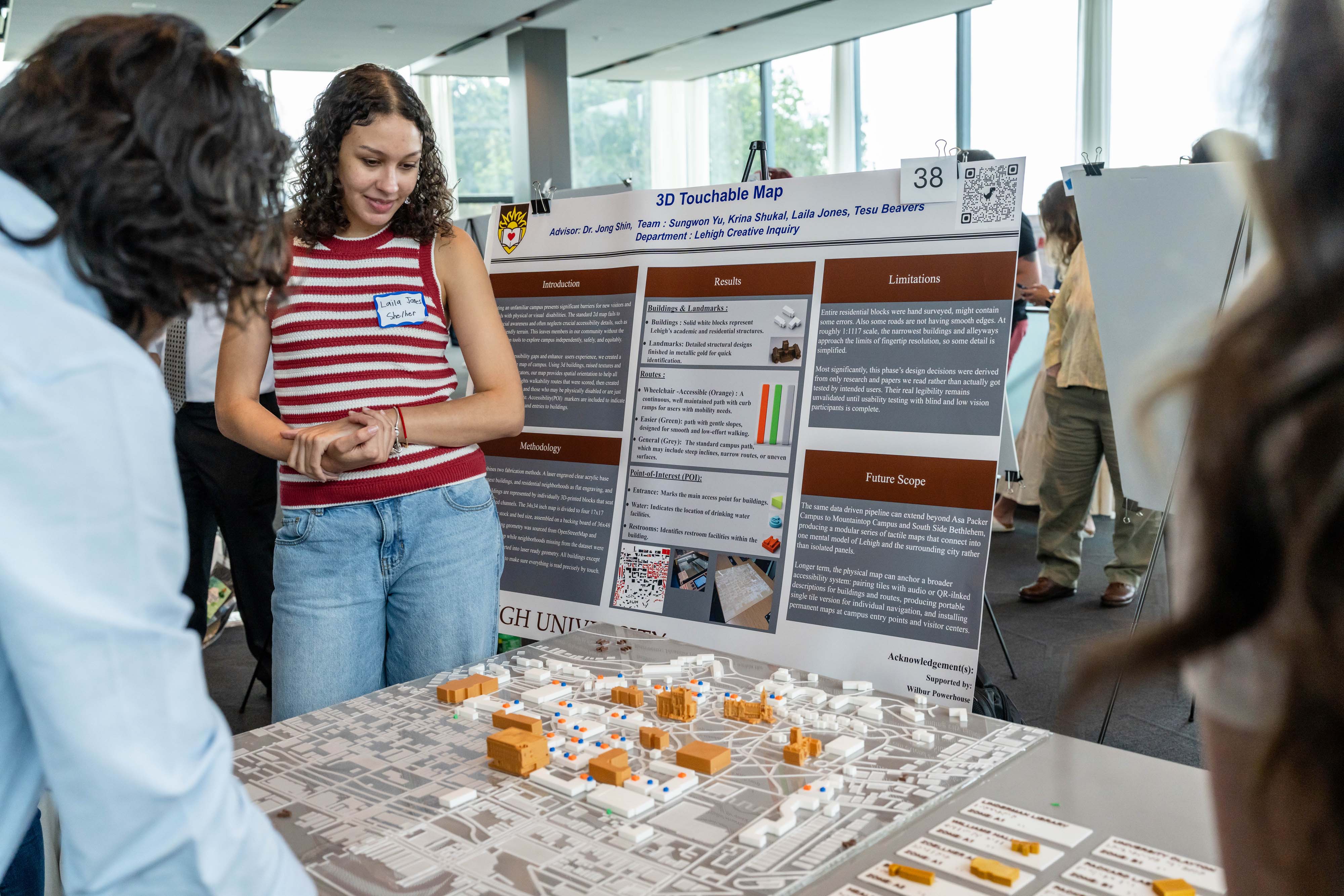
Mentored by Jong Shin, assistant professor of population health, this year’s team includes continuing fellow Jack Filius ’26 and 2026 Impact Fellows Jessica Lee ’28, Krina Niravkumar Shukal ‘27G, and Sungwon Yu ’29.
Building on earlier walkability and accessibility research on Lehigh’s Asa Packer campus, the team has launched an online platform that helps students, faculty and staff find walking routes based on their preferences.
Users can select a 10- or 20-minute walk and indicate how hilly they want the route to be. The platform then recommends a route based on those preferences, an important consideration on Lehigh’s steep campus.
Building the platform required the fellows to translate earlier walkability research into decisions about routes, user preferences and accessibility. The team has also begun collecting student feedback to better understand how people use the platform and what could be improved. The project is now expanding into a virtual reality experience intended to bring elements of nature indoors for people who face barriers to outdoor walking.
“Turning earlier research into a platform people can actually use changed the way I think about accessibility and product development,” Shukal said. “I learned that building something useful takes more than technology. It has to be easy to understand, responsive to different needs and designed around the people who will actually use it.”
A science kit, a sustainability game and a walking map may operate in very different settings, but each shows how an Impact Fellowship can connect research with education, sustainability, design, accessibility and human well-being.
“Whether on a university campus or in a rural village in India, well-being begins with a sense of belonging and connection to the world around us,” said Mehta. “By helping people learn, engage with their communities and make meaningful choices, these projects create opportunities for individuals to thrive and contribute to a better future for all.”