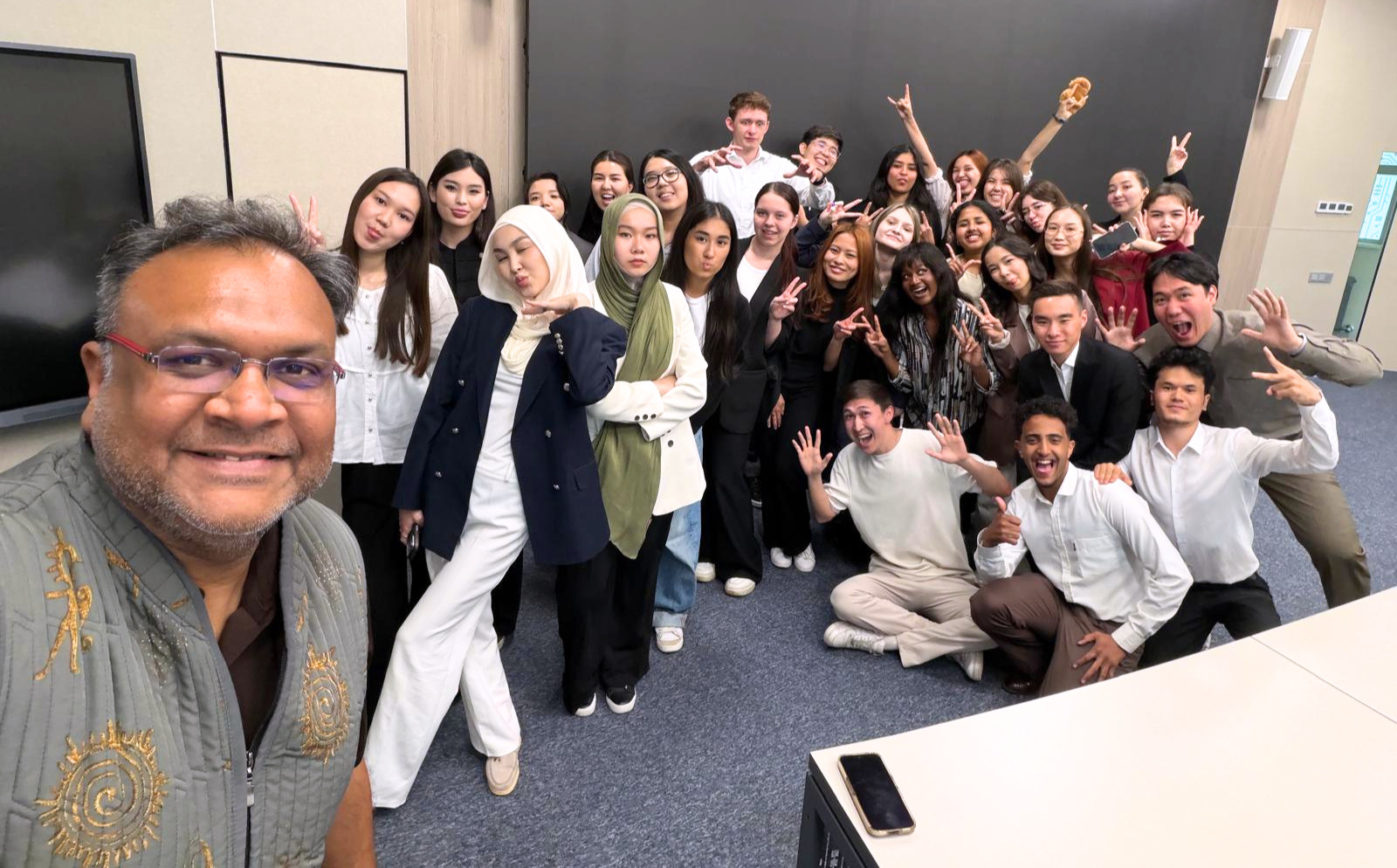
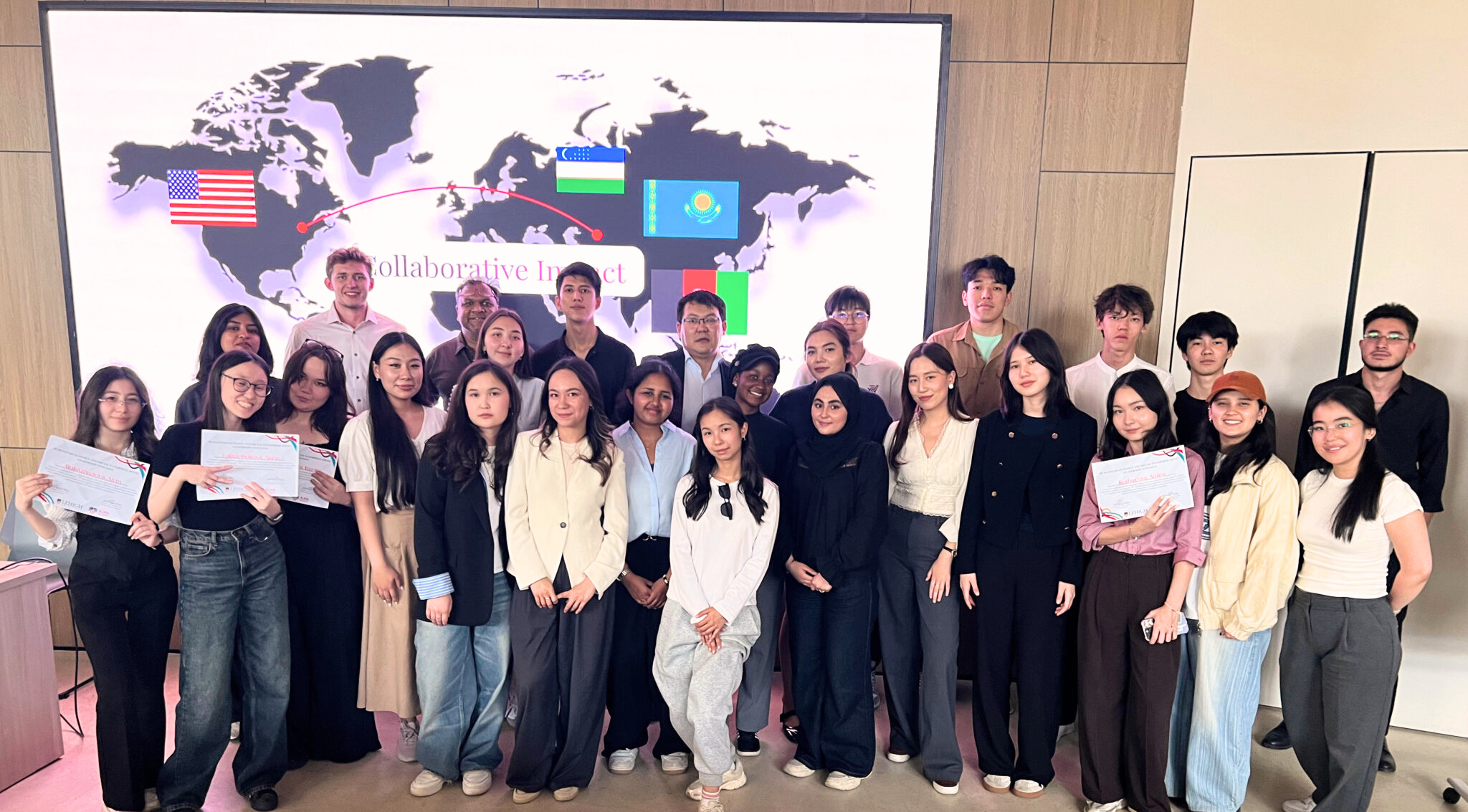
Lehigh University and Almaty Management University partnered to host the Humanitarian Design and Social Enterprise (HDSE) Leadership Intensive in Almaty, Kazakhstan, bringing together students, faculty and emerging changemakers for an immersive, hands-on experience in entrepreneurial leadership, innovation and social impact.
The program took place in May 2026 in two cohorts. The first cohort convened from May 19–23, followed by a second cohort from May 25–29. Collectively, the cohorts brought together 53 undergraduate and graduate students alongside ~20 professionals from institutions across Kazakhstan and the broader Central Asian region, including Almaty Management University, Suleyman Demirel University, KIMEP University, and the Kazakh-American Free University.
Participants came from a range of disciplines, including engineering, business, public policy, sustainability, social science and design. Throughout the intensive, they explored how young leaders can build sustainable solutions to complex societal challenges.
The intensive is part of Lehigh’s Sustainable Futures Fellowship program, a joint initiative of the Office of Creative Inquiry and the Lee Iacocca Institute for Global Leadership. The fellowship prepares selected students to design and lead immersive entrepreneurial programs that cultivate socially conscious changemakers. Participants are selected from applicants who have completed Lehigh’s Impact Fellowship program and demonstrated tangible outcomes through that work.
In Kazakhstan, the HDSE Leadership Intensive was led by Sustainable Futures Fellows Owen Holst ’27, a bioengineering major; Vini Jaiswal ’27, an industrial and systems engineering major; Eileen Kandie ’27, a bioengineering major; and Pragnya Yerramalli ’28, a materials science and engineering major. They worked alongside AlmaU co-facilitators Muza Yelgezek ’27 and Aruzhan Zhiyenali ’27, both international relations and economics majors. The team received support from Lehigh faculty mentor Khanjan Mehta and Zhaniya Khaibullina, AlmaU’s director of sustainable development.
At the opening ceremony, participants were welcomed by AlmaU Rector Timur Buldybayev; Heera Kamboj, public affairs officer at the U.S. Consulate General in Almaty; Khanjan Mehta, vice provost for Creative Inquiry at Lehigh University; and Sholpan Tazabek, vice rector for global partnerships at AlmaU. The speakers challenged participants to move beyond mere understanding of global grand challenges and instead develop the skills needed to innovate and execute through uncertainty, collaboration and action.
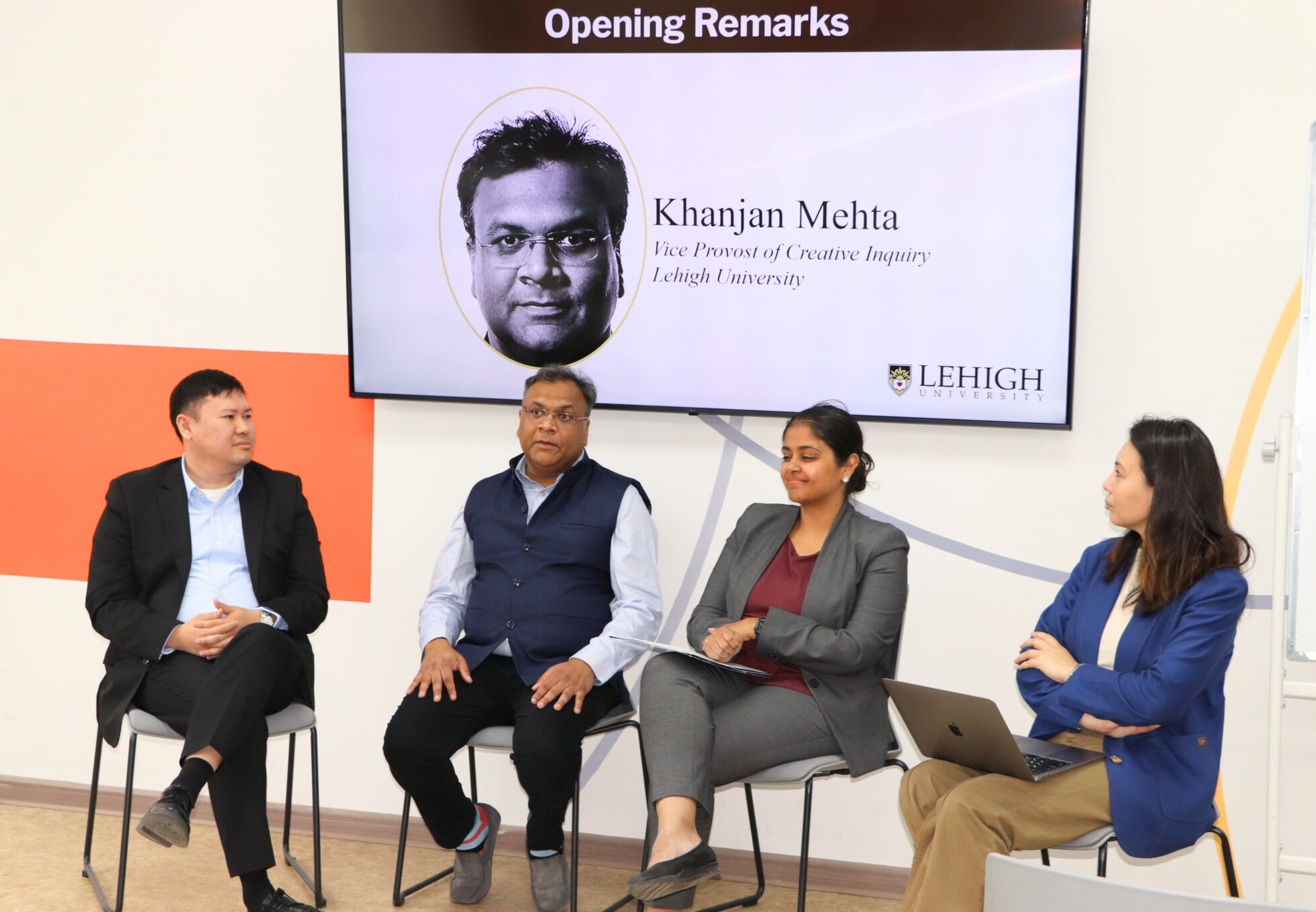
Kamboj said the AlmaU-Lehigh partnership reflects the value of international education and academic collaboration between Kazakhstan and the United States.
“Programs focused on humanitarian design and social enterprise are especially important today,” she said. “Around the world, communities are looking for innovative, practical and human-centered solutions to complex challenges. Universities play a critical role in preparing the next generation of leaders who can think creatively, collaborate across cultures and build solutions that work for society.”
Tazabek said that kind of international collaboration created space for students to practice leadership as a human-centered process.
“For AlmaU, co-hosting the HDSE Leadership Intensive was an opportunity to help students see leadership not only as a set of skills, but as a deeply human practice rooted in empathy, systems thinking and co-creation,” Tazabek said. “Today’s global challenges require young people who can work across disciplines, listen closely to communities and act with courage in uncertain environments. This program gave participants the space to do exactly that.”
For many participants, the HDSE Leadership Intensive offered their first sustained experiences with social entrepreneurship and venture development. The program gave them an opportunity to strengthen leadership, teamwork, communication and problem-solving skills while collaborating with peers from different academic and professional backgrounds.
Over each five-day workshop, the HDSE Leadership Intensive engaged participants in interdisciplinary teams working on challenges related to health care, education, environmental sustainability, accessibility, and financial literacy. Through a rigorous curriculum of interactive workshops, sparring sessions, field engagements and venture development activities, participants progressed from identifying and understanding complex problems to developing venture concepts with real-world potential.
Aldiyar Baiserik, a participant, and graduate of Bilkent University, said HDSE Leadership Intensive helped him build practical skills in entrepreneurship, leadership and decision-making.
“The program taught me how to think more deeply about entrepreneurship and leadership,” he said. “I learned how to stay disciplined, make better decisions and strengthen an idea so it can become a stronger product.”
Direct engagement with communities is a defining element of the HDSE model. Rather than relying only on classroom discussions, participants met with community members, stakeholders and professionals throughout Almaty to better understand the realities behind the challenges they hoped to address. Those conversations challenged initial assumptions and pushed teams to develop solutions grounded in lived experience rather than theoretical concepts.
For Mehta, that process is central to the value of the HDSE model.
“What makes the HDSE Leadership Intensive powerful is that students are not just learning about social innovation in theory. They are engaging with communities, testing assumptions and learning how to turn complex challenges into actionable ventures,” Mehta said. “In Kazakhstan, we saw participants grow from curious learners into more confident problem-solvers who could work across disciplines, listen carefully to stakeholders and imagine practical pathways for impact.”
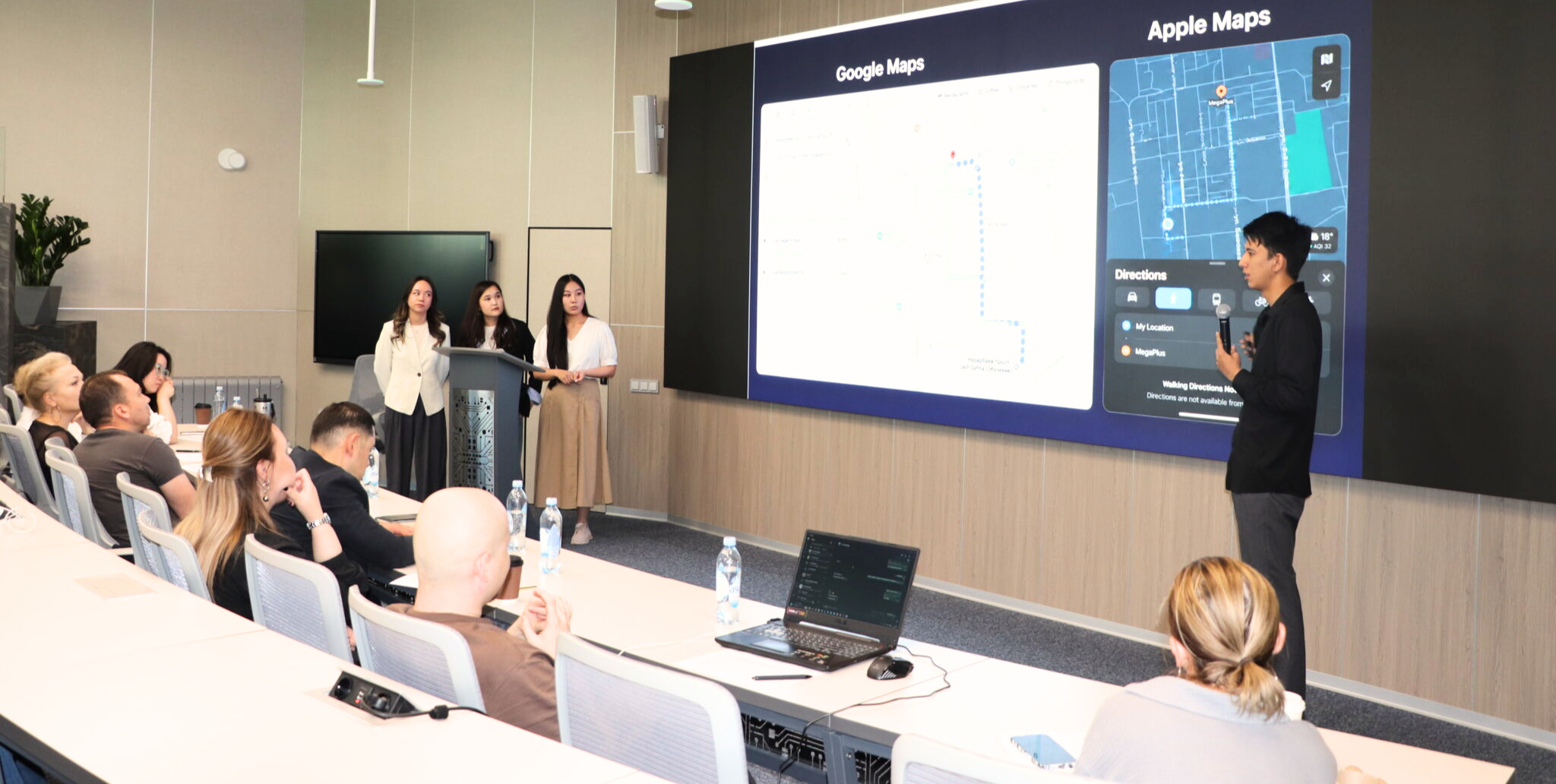
The program culminated in final juried presentations, where teams showcased the solutions and venture frameworks they had developed during the intensive. Ten jurors representing various industries and private-sector organizations evaluated the presentations.
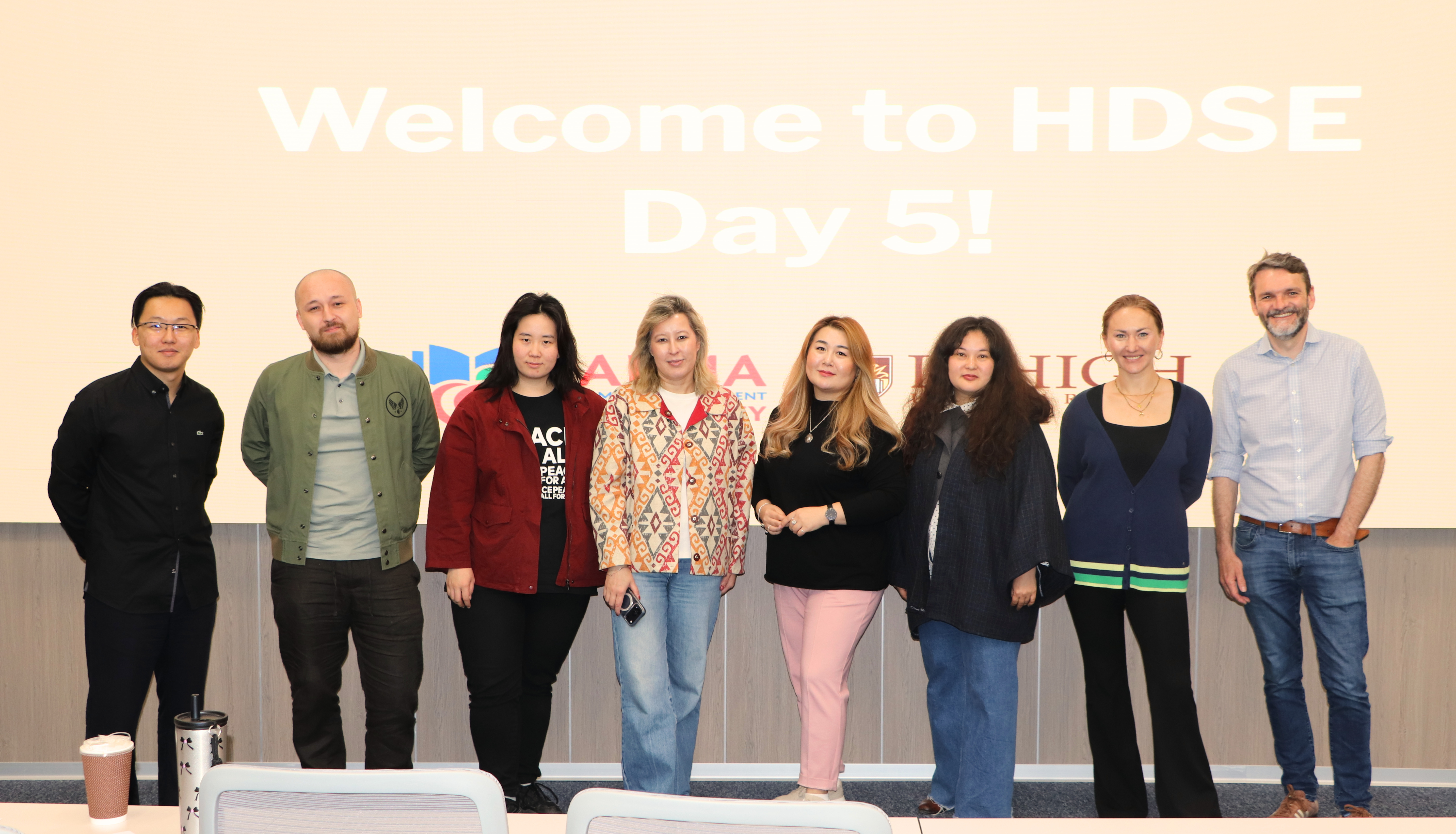
Yuliya Beloslyudtseva, C5+O.N.E. program director at American Councils for International Education, said one of the most rewarding parts of the HDSE Initiative was seeing students experience leadership in a real and meaningful way.
“True leadership starts with listening to others, understanding what communities need, working together and having the confidence to turn ideas into action,” she said. “The projects showcased not only creativity and fresh thinking, but also a sincere desire to make a positive change. It was inspiring to watch students develop solutions that could continue to benefit their communities well beyond the life of the program.”
One of the jurors, Dilyara Urmanova, director of the Ban Ki-moon Institute for Sustainable Development at Al-Farabi Kazakh National University, said the presentations showed both the quality of the students’ work and the program’s potential impact in Kazakhstan.
“I was impressed by the high level of project development, the interdisciplinary approach and the students’ ability to address real-world challenges through innovative and practical solutions,” Urmanova said. “Several projects demonstrated strong potential for implementation and could contribute directly to the sustainable development of Almaty, particularly in areas such as urban resilience, environmental sustainability and community well-being. What stood out most was the students’ commitment to creating meaningful impact.”
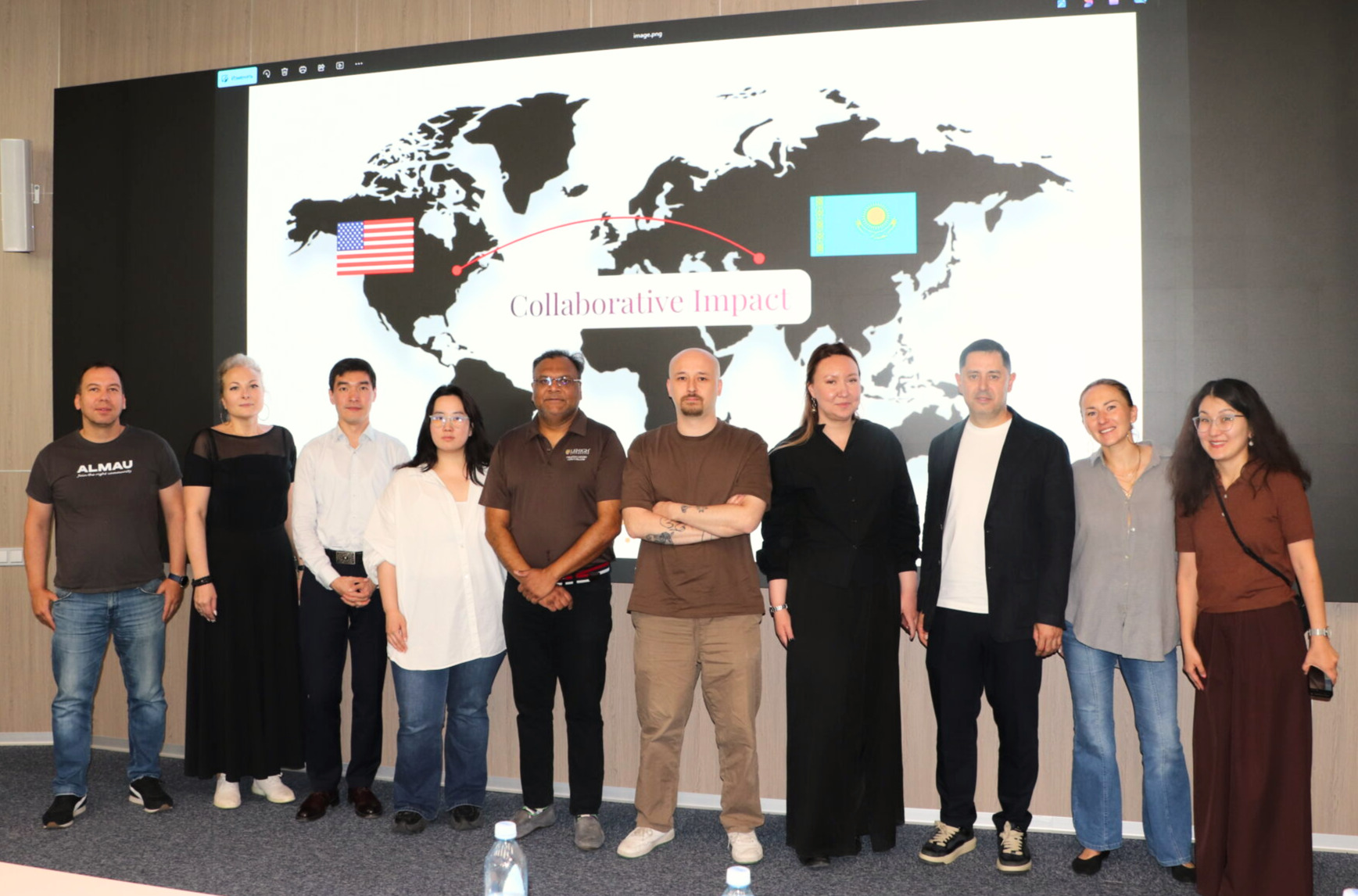
The ten ventures developed during the HDSE Leadership Intensive reflected a wide range of approaches to social innovation: EduBridge connected university student volunteers with school students through a comprehensive tutoring platform; Su-At addressed urban flooding through water-permeable tiles; PersonaLab proposed a personalized AI educator to support students and teachers; LLE created an educational resource platform with a progress tracker; SmartMed aimed to reduce time and energy waste in health care by automating unnecessary paperwork; CoCo helped students keep up with missed schoolwork while connecting university volunteers with school students online; Rexify focused on improving financial literacy for young adults and parents through an AI-powered platform; The Green Step encouraged walking to reduce traffic congestion by using rewards and points from small businesses; Almaty4U made accessibility information easier to find through a user-updated accessibility map; and Commitly proposed a plug-in for online learning platforms that incentivizes users to complete courses by offering cash back upon completion.
Sustainable Future Fellow Yerramalli said the growth was especially visible as teams moved from early problem framing to final presentations.
“HDSE helps students with an entrepreneurial mindset think at a higher level,” Yerramalli said. “Across both cohorts, participants came in highly motivated, but after the sparring sessions and presentation practice, we saw them begin to act more like social entrepreneurs. They moved beyond tunnel vision, answered questions with more confidence and supported their ideas with numbers and facts. Watching them build robust ventures in one week was incredibly fulfilling.”
This was the second HDSE Leadership Intensive in 2026 led by Sustainable Futures Fellows, following the first program in Brazil in March. Additional intensives are planned for India and the Philippines in July, with two workshops planned for each location.