
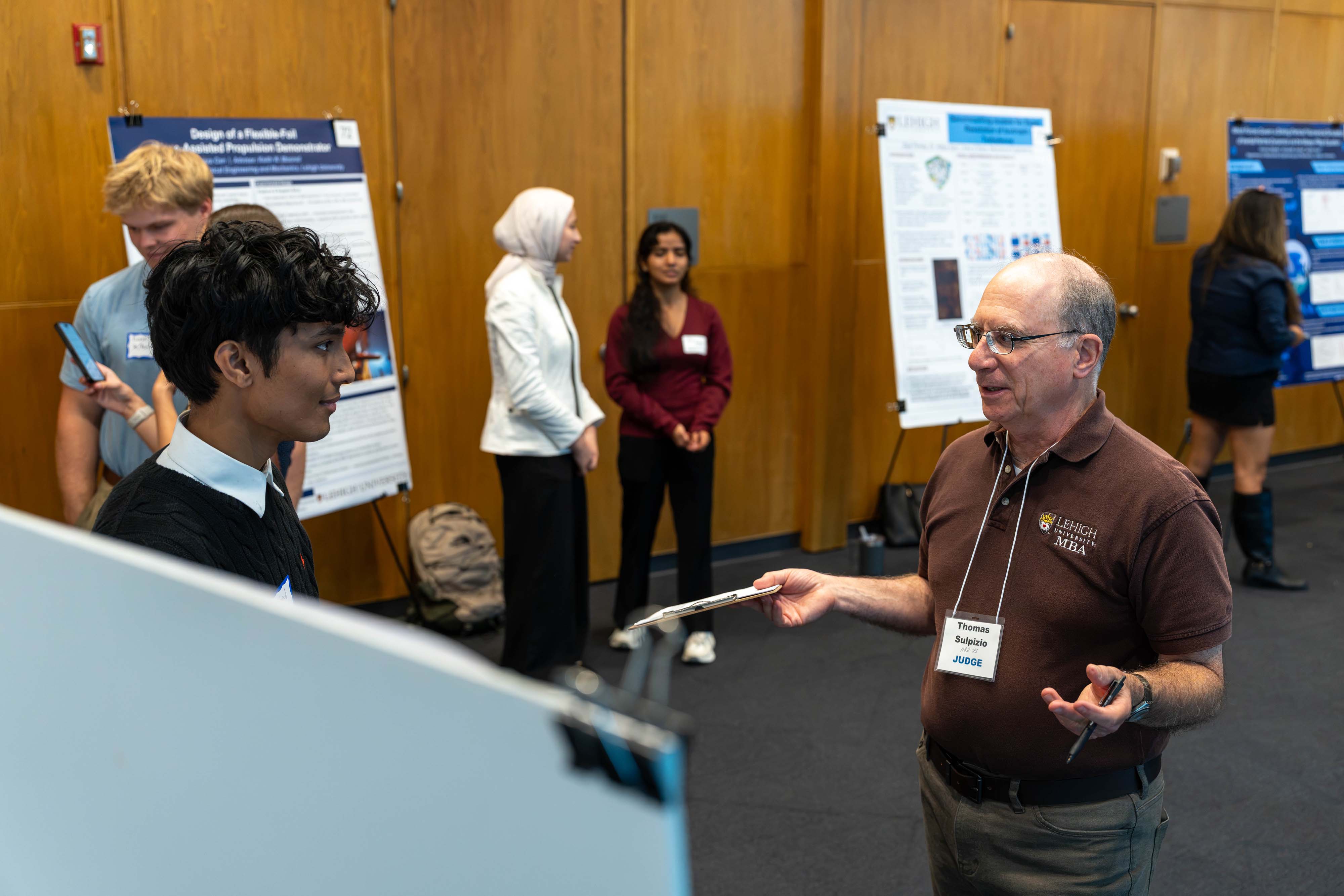
When Thomas E. Sulpizio ’85G was an undergraduate, he considered himself fortunate to secure a summer internship that allowed him to apply what he was learning beyond the classroom. Decades later, serving as a judge at Lehigh’s Summer Research Expo, he saw students gaining that kind of experience early in their college careers and across a wide range of disciplines.
“What impressed me most was the depth of knowledge these students already have,” Sulpizio said. “Many have only completed their freshman or sophomore year, yet they can explain complex research, understand its significance and consider where the work could lead. That is remarkable.”
Held Thursday, July 30, at Mountaintop, the 2026 expo brought together nearly 200 undergraduate and graduate students and faculty representing 75 projects. Participants from STEM-SI, the Mountaintop Summer Experience and the Research Translation AcceLUrator presented work they had advanced over the summer, responded to questions and discussed its potential impact with faculty, staff, alumni, peers, community members and guests from Lehigh and beyond.
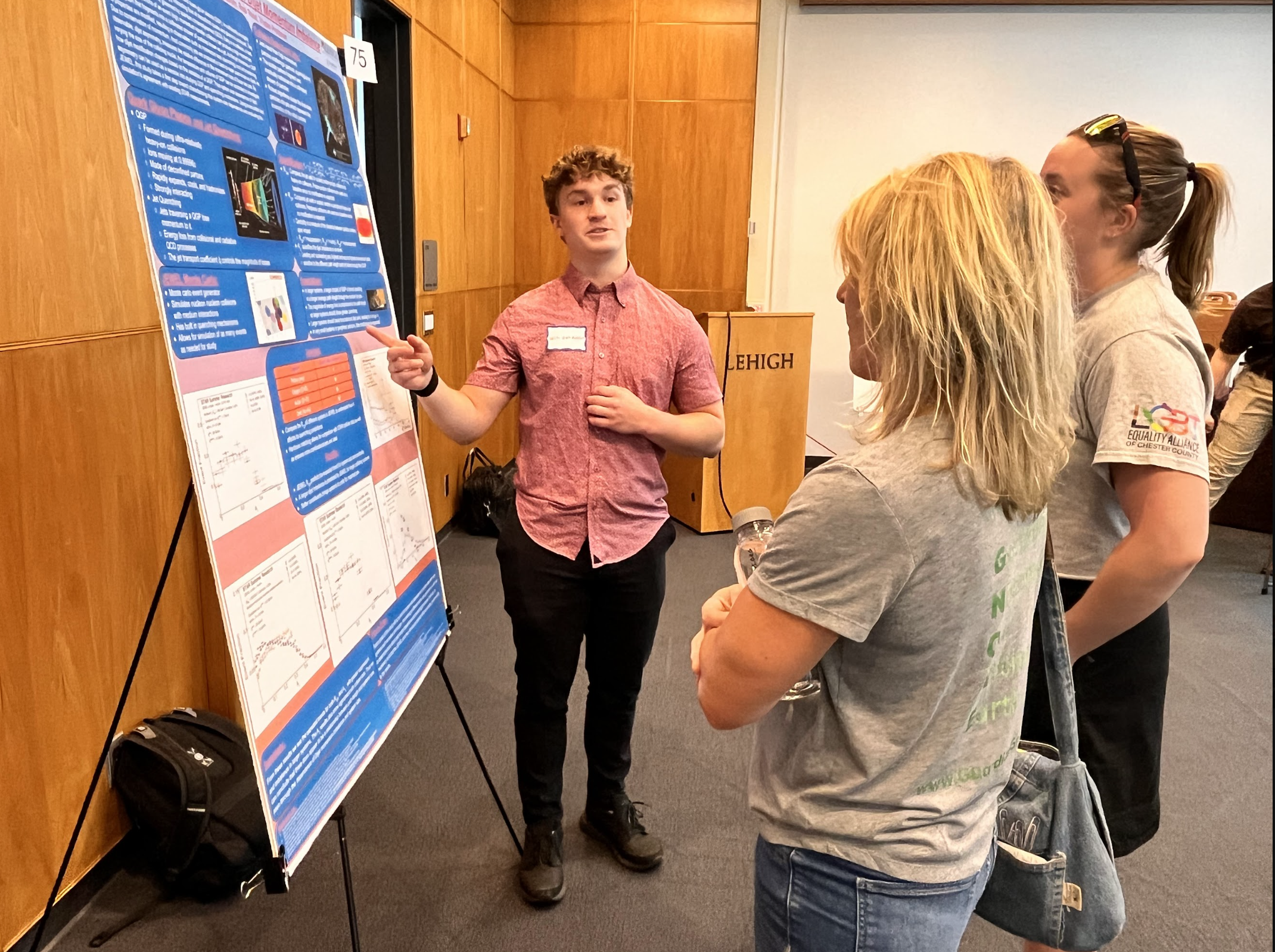
For students, the expo also offered an opportunity to step back from the day-to-day challenges of research and reflect on what they had accomplished. Wim Van Rossum ’28, a physics and mathematics double major at Rensselaer Polytechnic Institute, conducted research at Lehigh through its National Science Foundation-funded Physics Research Experiences for Undergraduates program. He presented “System Size Dependence of Dijet Momentum Imbalance,” a project examining how particle jets lose energy as they travel through quark-gluon plasma.
“Over 10 weeks of research, you encounter many problems and pursue different solutions, and it can be easy to lose sight of the bigger picture,” Van Rossum said. “Creating the poster helped me gather my thoughts, see how all the pieces fit together and better understand what I had accomplished.”
Other students valued the opportunity to discuss their work with judges who brought relevant professional expertise. Ellie Novak ‘27, molecular & cellular biology major whose STEM-SI-supported project, “Characterizing Mycobacteriophage Smurph Genes Through LappelDuVide Defense Escape Mutants,” examined bacteriophage defense mechanisms, said her conversation with a physician helped her consider the research’s broader medical potential.
“The judge I spoke with was a physician, so it was especially interesting to discuss the potential applications of this research,” Novak said. “We talked about how bacteriophages could one day be used in medicine as an alternative to antibiotics because of their ability to target bacteria.”
Teams also gained experience explaining their research to audiences outside their fields.
Summer Research Expo.
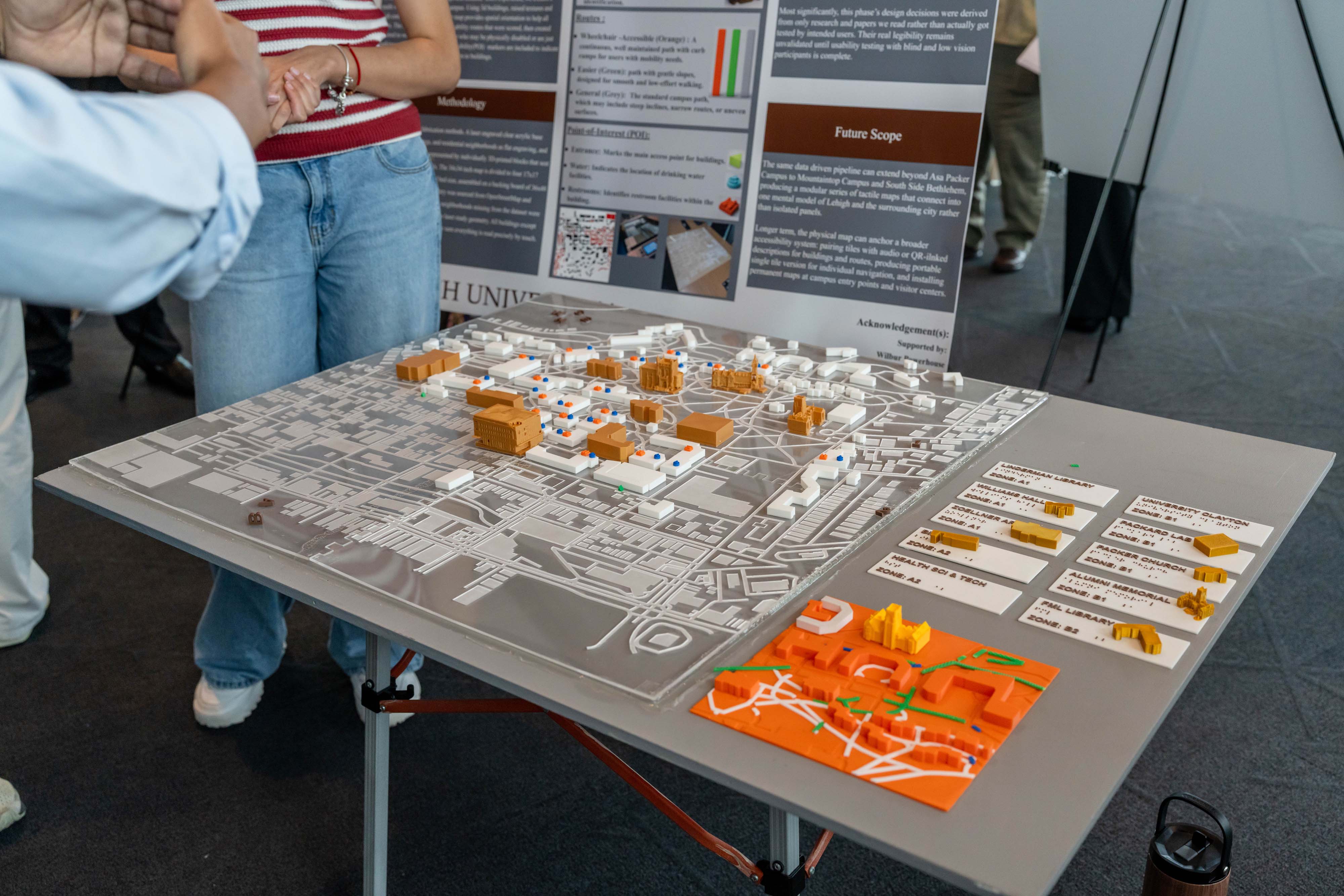
Supported by Lehigh’s Office of Creative Inquiry’s Campus Social Impact Fellowship program, the 3D Touchable Map team developed a multisensory tactile campus map designed to help visitors and people with physical or visual disabilities navigate Lehigh more safely and independently. The map highlights accessible routes, building entrances and essential amenities.
The team’s demonstration drew questions and interest from visitors throughout the expo. Laila Jones ’28, a bioengineering major; Krina Niravkumar Shukal, a graduate student in data science; and Sungwon Yu ’29, a computer science and business major, presented the project alongside faculty mentor Jong Shin, assistant professor in the College of Health.
“Presenting the map helped us understand which features resonated most with users and which parts of the project needed clearer explanation,” the team said. “The questions we received also gave us new ideas for making the map more useful and accessible.”
Bill Whitney, assistant vice provost for Experiential Learning Programs, said the expo reflects Lehigh’s commitment to giving students hands-on opportunities to collaborate across disciplines, apply their learning and contribute to work with real-world relevance.
“This annual event showcases the strength of Lehigh’s research infrastructure, as well as the signature summer opportunities on our campus for students and faculty to collaborate on impactful, interdisciplinary innovations” Whitney said. “Students, in particular, are amazed at what they can accomplish when they are given focused time, mentorship, and resources to take a deep dive into a project. These are the researchers and makers of the future.”
Photo credits: Christa Neu & Haidan Hu
2026 Summer Research Expo


