
The Human Edge
How Lehigh Students are Building Career-Ready Skills for Disconnected Youth in the Bay Area
The Human Edge, a Silicon Valley Social Impact Fellowship project, begins with a clear question: How can entrepreneurial education equip underserved youth with the human-centered skills that AI cannot replace?
One answer is a workshop that builds an entrepreneurial mindset and the essential skills needed to succeed in an AI-shaped economy.
“We named the workshop the Global Entrepreneurial Leadership Workshop,” said continuing fellow Jacob Seibert ’26, a finance major. “Participants traced their values, framed real problems, built venture ideas, and pitched to experienced founders.”
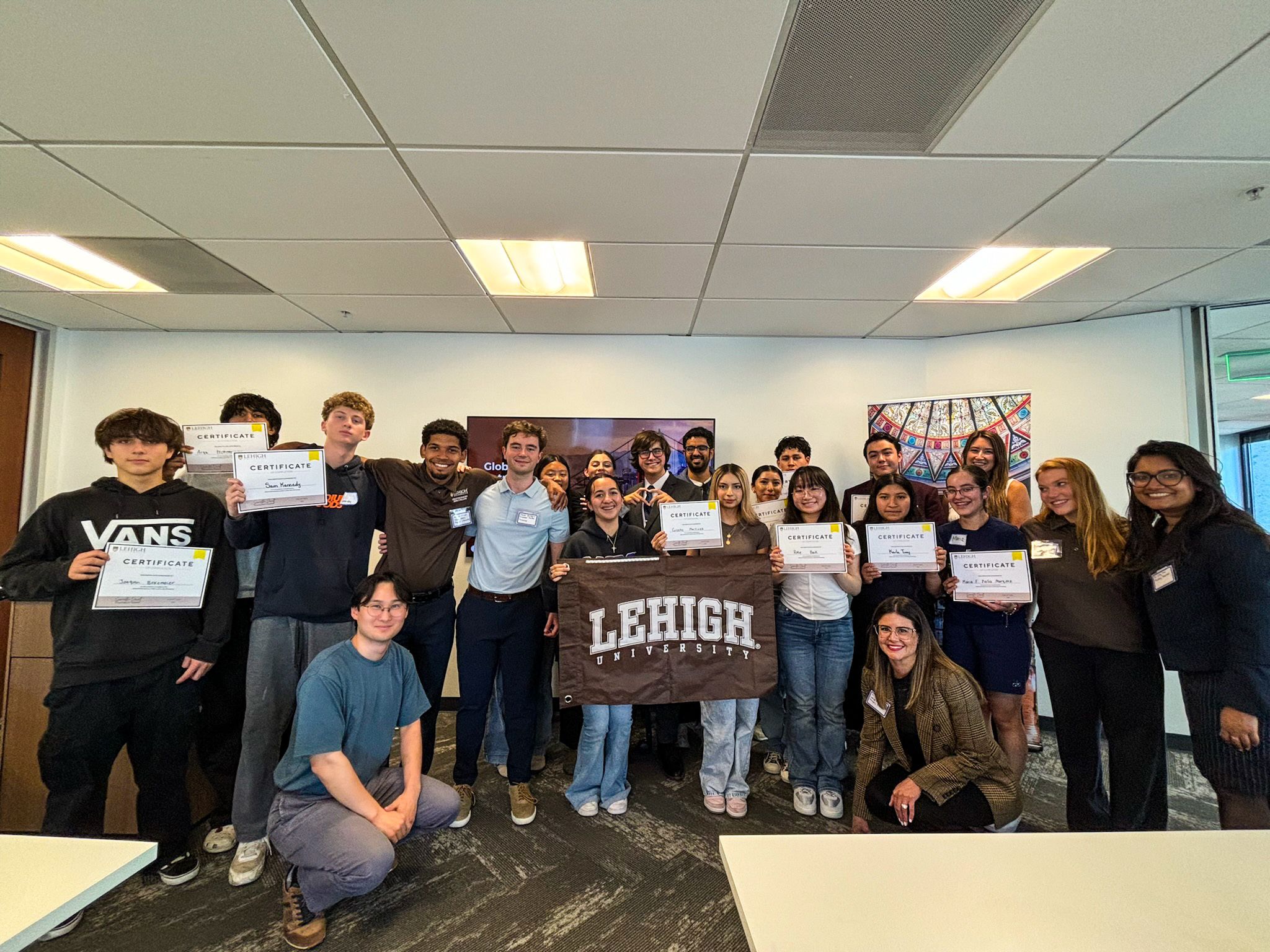
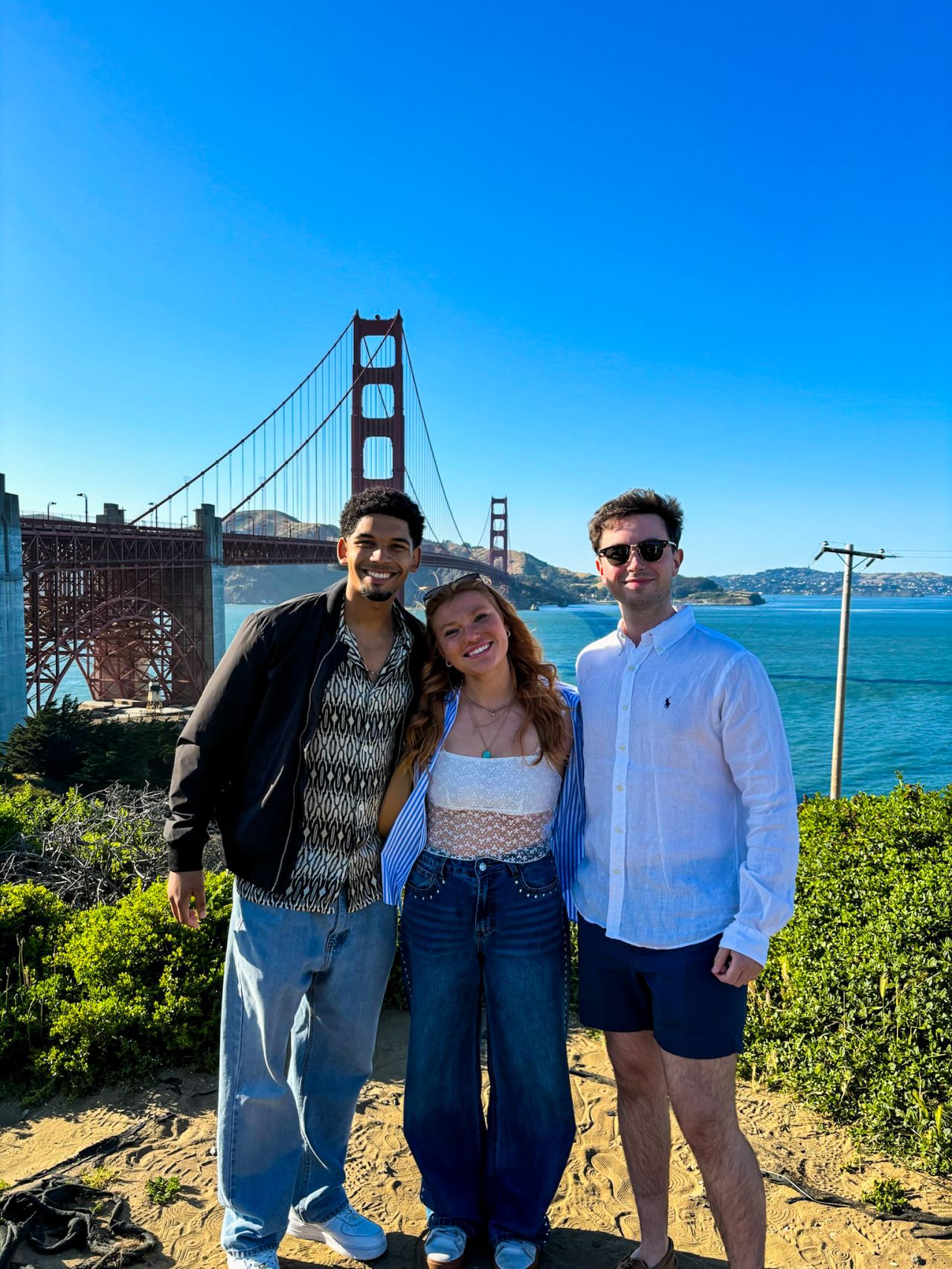
During 2025 fieldwork in San Francisco, the team hosted its first workshop with 15 underserved high school students. In addition to Seibert, the 2025 cohort included Michael Olivier ’27, a finance major, and Grace Phillips ’27, an international relations major. All three students will continue with the project in the new year. They will be joined by three 2026 Impact Fellows: Kevin Ayllon Gaytan ’29, an accounting major; Larah Flavier ’29, a political science and economics double major; and Olivia Lei ’28, a psychology major. The team is guided by Samantha Dewalt, managing director at Lehigh West, and Willy Das, senior research scientist at Lehigh West.
Das underscored what success looks like now.
“Success means reaching more students, tracking outcomes, and helping them take the next step, whether that is an internship, a new project, or college,” she said. She pointed to last summer’s pilot as proof of concept.
“Last year our students proved the concept,” she said. “They turned research into a real workshop that built confidence, skills, and networks for youth who are too often left out. We focus on what AI cannot replace, and we teach it in a way partners want to scale.”
The aim is not to avoid AI, but to build human-centered skills first and then use AI appropriately to advance learning and work.
“Access to transferable skills and entrepreneurial-mindset training can change trajectories,” Dewalt said. “The project treats career readiness as a blend of tools and habits. Students learn to present ideas, ask for feedback, build networks, and use AI to accelerate research and pitching without replacing human judgment.”
Looking ahead, Olivier said the team plans to expand the workshop across Bay Area schools, deepen partnerships with local organizations, and publish thought pieces on why human skills remain decisive in an AI era.
“Our goal is a repeatable, sustainable workshop that reaches more youth each year and leads to measurable gains in confidence, opportunity, and action,” he said.