
For Will Yaeger ’24, a fascination with fungi became a way to explore a much larger question: How can biological research help address challenges in agriculture and conservation?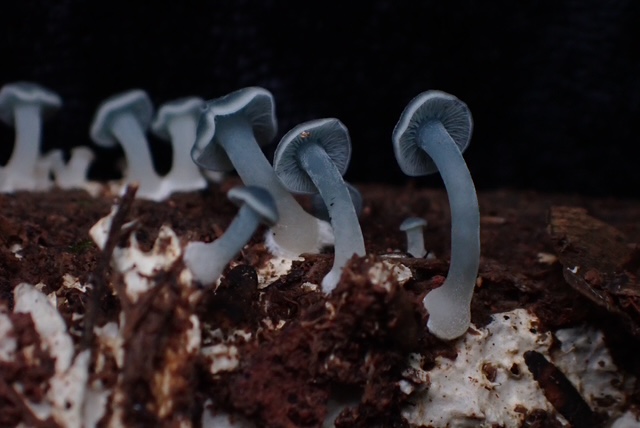
He began pursuing that question at Lehigh through GRO Mushrooms, a Global Social Impact Fellowship project developing low-tech mushroom cultivation systems to help address food insecurity in Sierra Leone. Three years with the project helped shape a research path that later took him to the Peruvian Amazon on a Fulbright grant and now to the University of Chicago, where he is pursuing a Ph.D. in Ecology and Evolution.
Yaeger joined GRO Mushrooms as a first-year student in 2020. During fieldwork in Makeni, Sierra Leone, in 2022, he worked with local partners and farmers to troubleshoot cultivation challenges and better understand how agricultural solutions must respond to local conditions.
“My involvement with GSIF was instrumental,” Yaeger said. “It helped me develop the skills I’m using now and deepened my understanding of the role of fungi in agriculture.”
“My involvement with GSIF was instrumental,” Yaeger said. “It helped me develop the skills I’m using now and deepened my understanding of the role of fungi in agriculture.”
The fellowship helped connect his scientific interests with applied, community-centered research. At Lehigh, Yaeger studied molecular biology and biocomputational engineering through the Integrated Degree in Engineering and Arts and Sciences program and conducted research in microbial ecology and genetics. His work with GRO Mushrooms also led to two papers presented at the IEEE Global Humanitarian Technology Conference.
His interest in fungi extended beyond the fellowship. While at Lehigh, Yaeger also discovered a mushroom species at South Mountain Preserve that had not previously been documented there.
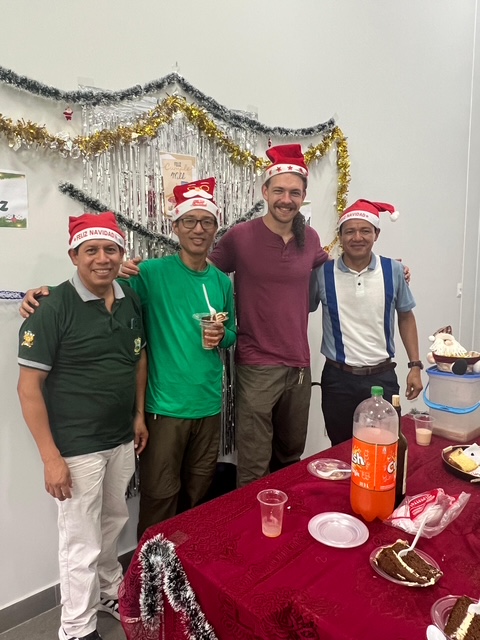
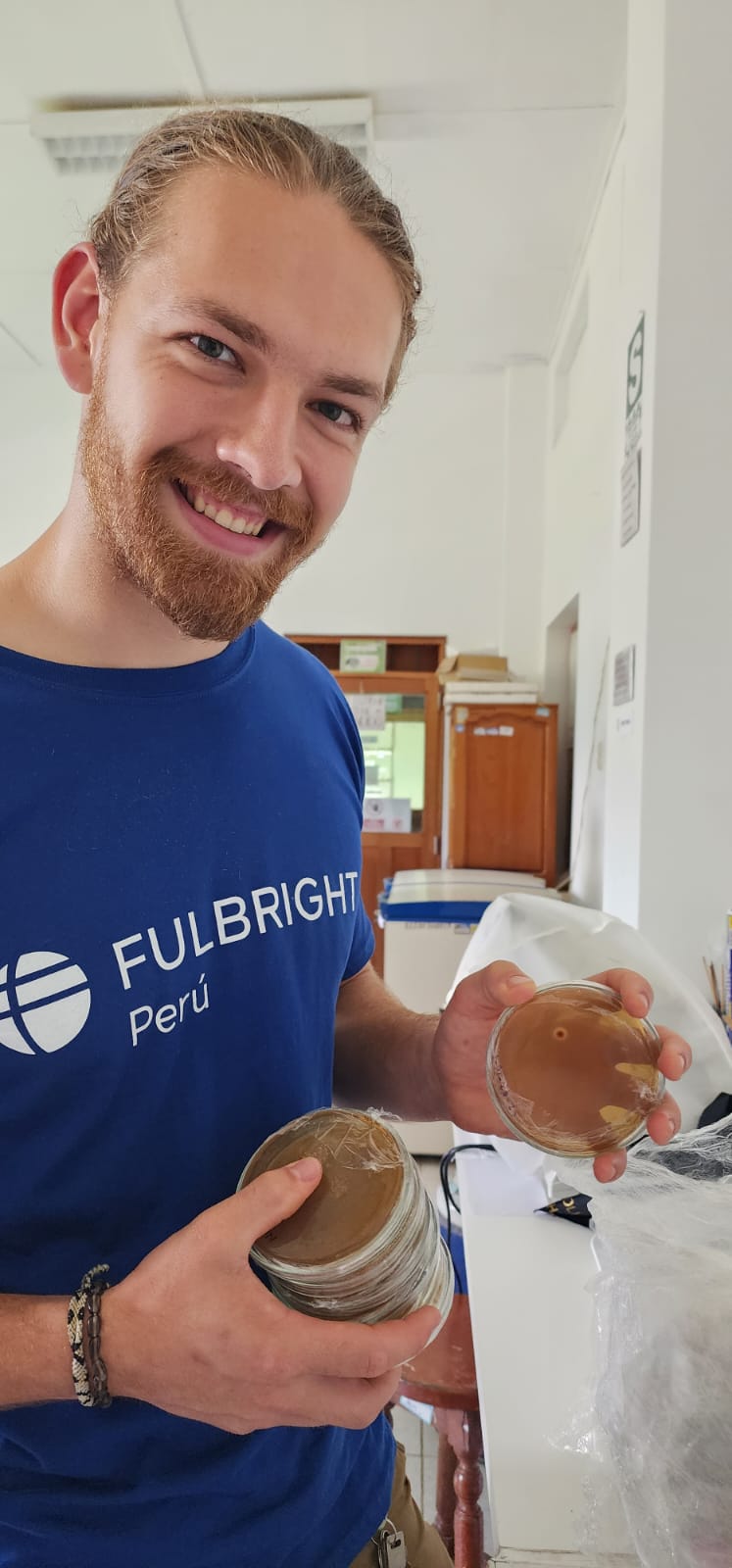
Af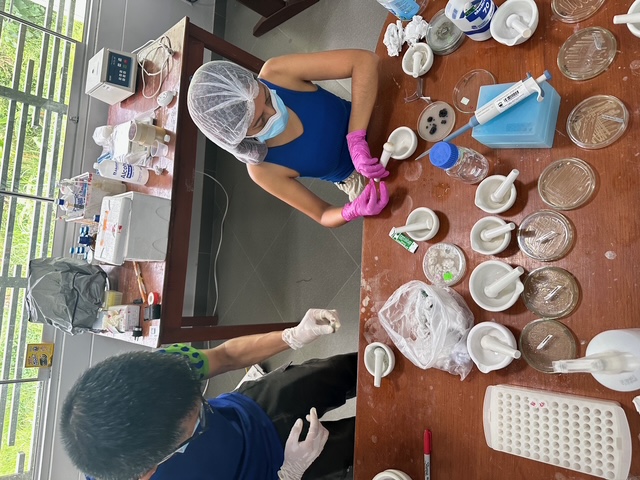 ter graduating in 2024, Yaeger took his research interests to the Peruvian Amazon through a Fulbright Research/Study grant. Based at the Universidad Nacional Agraria de la Selva in Tingo María, he spent a year developing microbial biocontrol approaches for fungal diseases of cacao, an important cash crop for smallholder farmers.
His research focused on identifying and characterizing native microorganisms with the potential to protect cacao from disease. He also collaborated with Peruvian researchers on the discovery and characterization of Amazonian mushrooms and crop pathogens, relationships that have continued beyond his Fulbright year.
Today, Yaeger is a Ph.D. student in Ecology and Evolution, working in the Kreiner Lab at the University of Chicago. His research examines the genetics and evolution of herbicide resistance in waterhemp, an aggressive agricultural weed. In 2025, he was named a National Science Foundation Graduate Research Fellow.
Although his research questions have evolved, the connection between biology and real-world challenges remains central to his work. Outside his doctoral research, Yaeger continues collaborating with colleagues in Peru and participating in environmental research and education initiatives in both Peru and Chicago.
After completing his Ph.D., Yaeger plans to continue working in applied plant and microbial research, using ecological genetics to address challenges in agriculture and conservation.