
Fulbright Scholar Uzma Khan came to Lehigh University from Pakistan with a background in educational technology and a clear interest in how technology can improve learning.
Before Lehigh, Khan designed and managed digital learning products and learning analytics for public schools in Pakistan. She came to Lehigh in 2025 to pursue an M.S. in Instructional Technology and deepen her understanding of how technology can be designed around real educational needs.
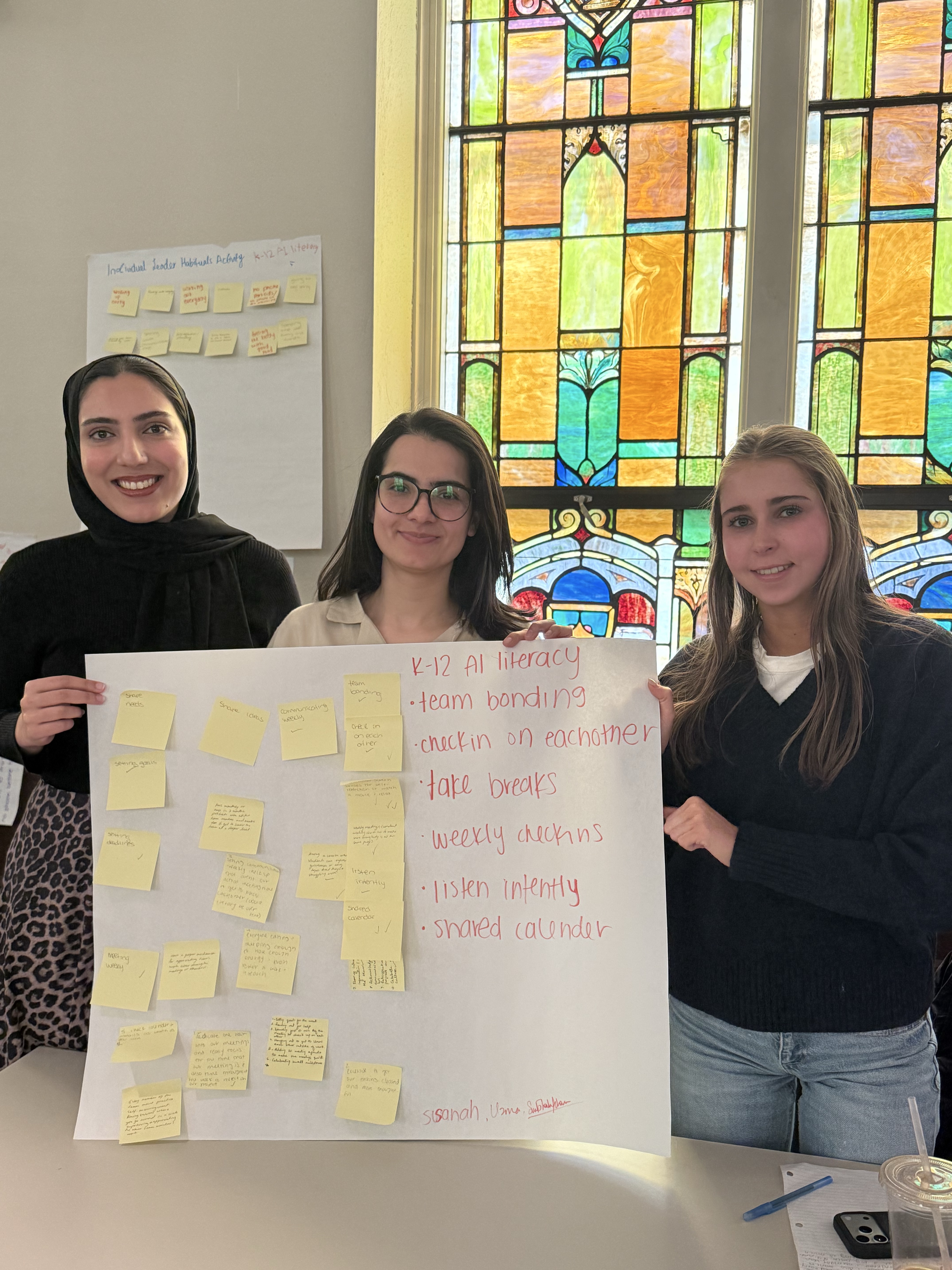
Those same interests led her to the Impact Fellowship program. Khan joined the Intelligent Tutoring Systems for AI Literacy project, where she works with faculty mentor Juan Zheng, assistant professor in Lehigh’s College of Education, to explore how students can better understand the ethical and responsible use of artificial intelligence.
Khan was particularly drawn to the project as AI becomes increasingly embedded in education.
“The growing role of AI in education and the need to help learners think critically about how it should be used” made the project a natural fit, she said, especially because of its focus on issues such as bias, transparency, accountability and potential harm.
During her Impact Fellowship, Khan has helped develop an AI ethics learning experience for undergraduate students. Her work includes instructional design, case-based activities, teaching resources and interactive content that encourages students to engage with ethical questions rather than simply learn definitions.
One of the most rewarding parts, she said, has been watching those ideas become something students can actually use.
“Working through real-world AI scenarios made me realize that ethical AI is much easier to understand when learners are given the opportunity to question, discuss, and make decisions rather than passively learning,” Khan said.
The fellowship has also reinforced a lesson she hopes to carry into her future work in Pakistan: AI literacy is about more than knowing how to use new tools.
“It is also about understanding when, why, and whether we should use them,” Khan said.
For Khan, the interdisciplinary nature of the Impact Fellowship has been especially valuable. Working with faculty and students from different backgrounds has strengthened her belief that responsible technology requires more than technical expertise.
“We need educators, technologists, and learners bringing their perspectives together to think about how technology should shape our future,” she said.
As she looks ahead, Khan hopes to bring that perspective back into her work developing educational technology in Pakistan, particularly as AI becomes a larger part of classrooms and education systems.